Sichuan Lanfan Transport Construction Co., Ltd. specializes in the production of various metal mesh fences.
Leave Your Message

How to Choose the Best PVC Coated Welded Mesh in China?

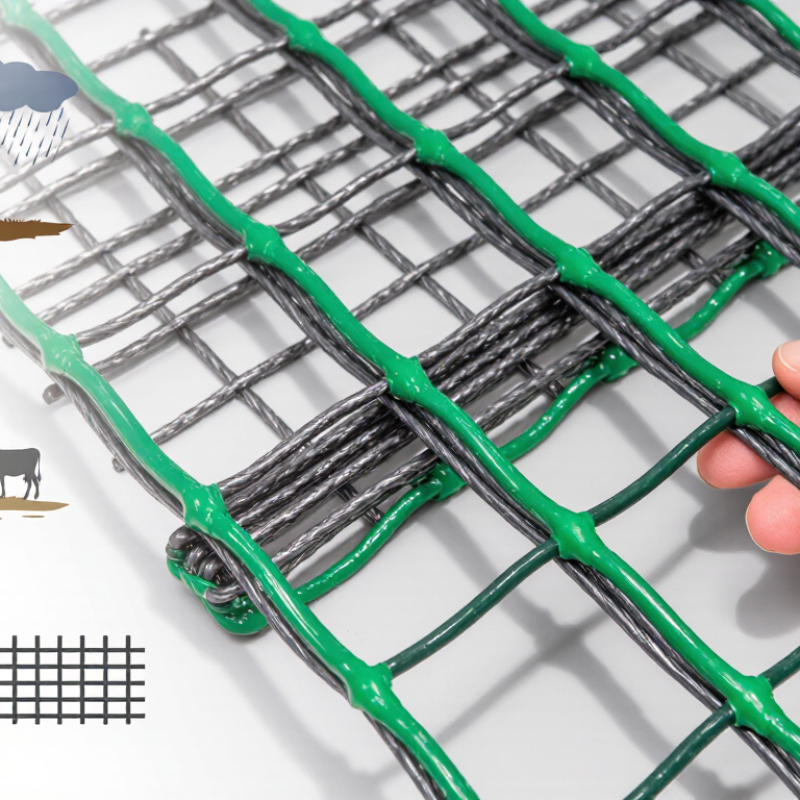
Choosing the right PVC Coated Welded Mesh in China starts with the job it must perform. Will it face rain, soil, livestock, or frequent handling? The answer affects wire diameter, aperture size, panel dimensions, and coating requirements. A sample panel can reveal details a product listing may hide: uneven welds, thin coating near intersections, or sharp cut ends. Small flaws matter.

For transparency, the quotation below is an original illustrative line, not a verified statement from a real expert. A fictional mesh specialist, Lin Wei, puts the selection principle this way: “Check the welds and coating together; one cannot compensate for the other.” That is practical advice, but it is not a substitute for documented specifications. Ask Chinese suppliers how they control wire size, weld consistency, coating thickness, and finished dimensions. Request a sample and inspect it under good light. Look closely where the wires cross.

Price alone tells little. Confirm the mesh’s intended use, packaging, lead time, and inspection process in writing. Compare like with like, including panel size and coating type. If a supplier’s claims are vague, pause and ask for measurable details. This guide will help buyers assess those factors, compare manufacturers, and avoid common sourcing mistakes. Some decisions still depend on site conditions, and a checklist cannot replace a careful sample review.
How to Choose the Best PVC Coated Welded Mesh in China?

Define the Application and Mesh Opening: Common Apertures Span 6.4–50.8 mm

Choose the opening for the job, not by appearance alone. The stated 6.4–50.8 mm range covers very different uses. At 6.4 mm, openings can help retain smaller items, but may collect leaves and dirt. At 50.8 mm, visibility and airflow improve, while smaller animals or objects may pass through. Small openings retain more. But they clog.

ISO 4783-1:1989 provides guidance for selecting industrial screen aperture and wire-diameter combinations. Use it as a technical reference, not as a substitute for project testing: PVC coating changes the effective opening, and coating thickness can vary. Ask suppliers to state whether their aperture measurements are taken before or after coating. Measure a sample with calipers, too. That small check can prevent an awkward fit.

Match the mesh to what must pass, stay contained, or be kept out. For garden guards, check the target animal’s head size and likely climbing points; for machine guards, assess reach-through risk and required visibility. A 25.4 mm opening may suit one enclosure but fail another. I would not choose from aperture alone. Check wire diameter, coating thickness, edge finish, and panel tension, then trial a section in the actual setting. I have seen neat specifications miss a simple problem: the cut edge was left exposed.
Match Wire Diameter and Weld Spacing to Load, Span, and Panel Format

How to Choose the Best PVC Coated Welded Mesh in China?

Match the mesh to the job, not just the quoted price. A garden divider and a loaded storage enclosure need different support. Consider what the panel must carry, how far it spans between posts, and whether it will be supplied as sheets or rolls. Longer spans can flex more, especially when the mesh supports heavy items. Thicker core wire may help, but it also adds weight and cost. Check the wire diameter before coating, since PVC increases the finished measurement without adding equivalent structural strength. Small detail. Ask suppliers to state both dimensions clearly.

Weld spacing affects how loads spread across each panel. Closer spacing can improve support for smaller or unevenly distributed loads, while wider openings may suit lighter-duty uses. Match the opening size to the objects the mesh must retain, and check that edges align with frames and fixing points. For large panels, review the proposed post spacing too; a strong mesh can still bow between supports. Request a drawing and a sample panel, then inspect weld consistency and coating coverage. Measurements on paper can look tidy, yet real installations reveal awkward cuts or weak corners. Treat an initial specification as a working estimate, not a guarantee, and revise it after checking the actual span and load.

Specify the PVC Jacket: Typical Coating Thickness Is 0.4–0.6 mm

When choosing PVC coated welded mesh in China, treat the jacket thickness as a measurable specification, not a vague quality claim. A typical coating is 0.4–0.6 mm thick, but confirm whether this refers to the PVC layer alone or the finished wire diameter. The difference affects opening size, fit, and the mesh’s overall weight. Ask for the measurement method and tolerance in writing. Small details matter.

Match the thickness to the job. For outdoor fencing exposed to rain and sunlight, check coating adhesion and UV resistance as well as thickness. A thicker jacket is not automatically better if it cracks during bending or has uneven coverage at welds. Request a sample and inspect cut ends, weld points, and a gently bent section. Look for bare spots, lifting, or sharp transitions. These checks take time, but they can reveal problems a product sheet misses. I would also compare the stated wire gauge before coating, since measuring only the finished diameter can hide a thinner steel core. That detail is easy to overlook, and specifications are not always perfectly clear.

How to Choose the Best PVC Coated Welded Mesh in China?

Specify the PVC jacket: a typical coating thickness is 0.4–0.6 mm.

The bar shows the typical PVC coating thickness range. When comparing mesh specifications, confirm how the coating thickness is measured and verify that it meets your project requirements.

Verify the Galvanized Wire Core Against ASTM A641/A641M

How to Choose the Best PVC Coated Welded Mesh in China?
Verify the Galvanized Wire Core Against ASTM A641/A641M

PVC hides the steel wire beneath it. Before purchasing, ask for the core-wire diameter, zinc-coating class, and production-lot identification. ASTM A641/A641M covers zinc-coated carbon steel wire, with requirements that vary by wire size and coating class. Check the applicable table rather than relying on a vague “heavy galvanized” claim. One zinc-mass figure cannot suit every wire diameter.

Request test certificates linked to the shipment, then compare their coating-mass results with the relevant ASTM requirements. Check a retained sample as well. Carefully remove the PVC and have an independent laboratory test the zinc coating using the method agreed in your purchase specification. A neat certificate can still refer to a different production lot. Verify the traceability. Also confirm whether the listed diameter describes the steel core or the finished coated wire; confusing the two can affect mesh openings and fit. ASTM compliance addresses the galvanized wire, not weld strength or PVC thickness. Ask for separate test records for those properties. Small details matter.

How to Choose the Best PVC Coated Welded Mesh in China? - Verify the Galvanized Wire Core Against ASTM A641/A641M

Selection Dimension What to Verify Evidence or Inspection Method Why It Matters
Galvanized wire standard Confirm that the steel wire core is specified and documented as zinc-coated carbon steel wire conforming to the applicable edition of ASTM A641/A641M. Request a material test certificate identifying the standard edition, wire size, coating class, and test results. ASTM A641/A641M addresses zinc-coated carbon steel wire; it does not by itself certify the PVC coating or the finished welded mesh.
Zinc coating class and mass Check the specified coating class and the applicable zinc-coating requirements for the wire diameter. Compare reported results with the requirements in the cited standard edition. Review the certificate’s coating test results and verify that the test method and sample traceability are stated. Zinc coating provides corrosion protection to the wire core, including areas that may be exposed if the polymer layer is damaged.
Wire diameter Establish whether the stated diameter refers to the galvanized wire core or the finished PVC-coated wire. These are different measurements. Ask for both dimensions where applicable and measure representative samples with a suitable calibrated instrument. Using the finished diameter as the steel-core diameter can lead to incorrect comparisons of strength and mesh specifications.
Wire tensile properties Compare the wire’s reported tensile properties with the purchase specification and the applicable requirements for the selected wire. Request test results linked to the production lot; check the test method and units before comparing values. Wire properties affect handling, fabrication, and the mesh’s ability to retain its shape under the intended service conditions.
Weld integrity Inspect welds for consistent formation, missing intersections, visible cracks, and damage to the protective coating around welded points. Use visual inspection and, when required by the order specification, documented weld or shear testing. Weld quality influences panel integrity; welding can also affect protective coatings at the intersections.
Mesh opening and panel dimensions Confirm the specified opening size, wire spacing, panel length, and panel width, including the measurement tolerances agreed in the order. Measure samples in both directions and compare the results with the approved drawing or purchase specification. Accurate dimensions help ensure that panels fit the intended frame, enclosure, or installation layout.
PVC coating coverage Check that the polymer layer is continuous and reasonably uniform, with no obvious bare areas, blisters, cracks, or peeling. Inspect coated wire and welded intersections visually; use agreed coating-thickness or adhesion tests if specified in the contract. The PVC layer is a separate protective layer from the zinc coating and should be assessed independently.
PVC material and color Specify the polymer type, color, and any required performance properties rather than relying on color alone as proof of composition or durability. Request a product data sheet and lot-related inspection records; define any required aging, adhesion, or exposure tests in the purchase specification. Different formulations and service environments can affect coating performance. ASTM A641/A641M does not establish PVC formulation requirements.
Corrosion and service environment Describe the intended exposure, such as indoor or outdoor use and contact with moisture or chemicals, and select coating requirements accordingly. Document the exposure conditions and any required corrosion-test method, duration, and acceptance criteria before ordering. No single coating choice is suitable for every environment; test conditions and acceptance limits should be agreed in advance.
Lot traceability and inspection Ensure certificates and inspection records identify the production lot and correspond to the supplied wire and mesh. Match lot or batch references on documents, labels, and packaging; define sampling and rejection criteria in the order. Traceable records make it possible to verify that test results apply to the material actually delivered.

Specification note: State the required ASTM A641/A641M edition and wire-coating class in the purchase documents. Set separate, measurable requirements for the PVC layer, welded mesh dimensions, and finished-product inspection.

Assess Site Corrosion Exposure Using ISO 9223 Categories C1–CX

ISO 9223 categories help describe atmospheric corrosion, from C1, very low, to CX, extreme. They are useful when selecting PVC coated welded mesh, but they do not predict its exact service life. The steel core and any metallic underlayer still matter beneath the polymer coating.

Assess the actual site, not just its broad climate zone. Coastal locations may face salt carried inland by wind; industrial areas can have acidic pollutants. Sheltered corners, wet soil contact, and frequent irrigation can create harsher conditions than nearby open ground. Small details matter. A fence beside a road may collect splash and grit near its base.

Use the likely category to guide questions about coating thickness, weld coverage, edge protection, and inspection intervals. Ask suppliers for test methods and coating data, rather than relying on a general “corrosion-resistant” claim. ISO 9223 describes atmospheric exposure; it does not fully account for abrasion, standing water, or damage during installation. That distinction is easy to overlook. If conditions vary across the site, assess the most exposed sections separately and treat the category as a starting point, not a guarantee.