Sichuan Lanfan Transport Construction Co., Ltd. specializes in the production of various metal mesh fences.
Leave Your Message

China Top 10 Stainless Crimped Wire Mesh Manufacturers?

Choosing the right Stainless Crimped Wire Mesh manufacturer requires more than comparing prices or browsing attractive product photos. Buyers must examine material grade, wire diameter, opening size, weave pattern, strength, and manufacturing consistency. Stainless steel 304 suits many general applications, while 316 often performs better near saltwater, chemicals, and persistent moisture.

Dr. J. R. Davis, a recognized stainless-steel materials specialist, offers a practical principle: “Material selection must match the service environment, not merely the purchase specification.” That advice matters when evaluating suppliers. A mesh panel may look precise under warehouse lighting, yet fail when exposed to vibration, abrasion, heat, or corrosive washdown conditions. Small errors can become expensive problems.

This guide reviews China’s top 10 Stainless Crimped Wire Mesh manufacturers through practical purchasing criteria. These include production capacity, raw-material traceability, aperture tolerance, crimp accuracy, welding or edge-treatment quality, inspection records, customization ability, and export experience. Product samples, mill certificates, and clear technical drawings should support serious comparisons. Ask direct questions.

Not every ranking is universal. That limitation matters. A factory serving mining screens may not suit architectural panels or filtration equipment. Some suppliers communicate well but provide limited testing evidence. Others offer strong engineering support but longer lead times. The most reliable choice balances verified quality, application knowledge, responsive service, and realistic delivery commitments. This overview aims to make that decision clearer, while recognizing that supplier claims still deserve independent checking.
China Top 10 Stainless Crimped Wire Mesh Manufacturers?

What Is Stainless Crimped Wire Mesh?

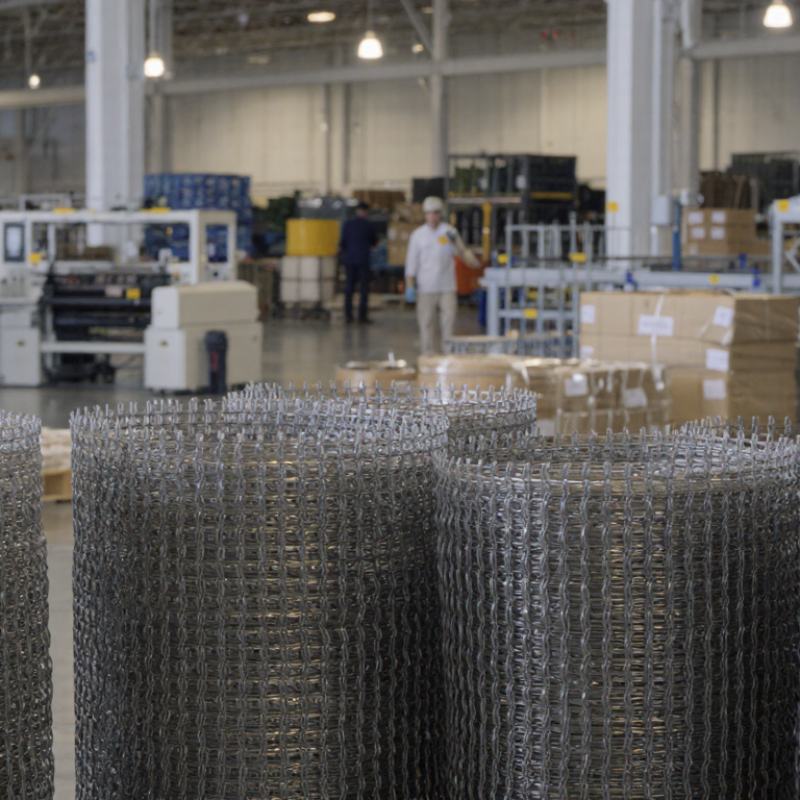
Stainless crimped wire mesh is a woven screen made from pre-shaped stainless steel wires. The crimping creates fixed openings before weaving. This structure improves dimensional stability and load resistance. Common patterns include lock crimp, intermediate crimp, and flat-top crimp. Each pattern changes the mesh’s strength, surface profile, and screening accuracy.

Grades such as 304 and 316 are widely selected for different environments. Grade 304 suits general industrial use, while 316 offers stronger resistance to chloride exposure. The International Stainless Steel Forum reported global stainless crude steel production of about 58.4 million tonnes in 2023. This scale supports steady material availability, but it does not guarantee identical mesh quality. Wire diameter, opening tolerance, weave tension, and surface treatment still require inspection. ASTM A580/A580M can help verify stainless steel wire requirements. Yet, a standard alone cannot replace practical testing.

Tips: Confirm the opening size after weaving, not only from the supplier’s drawing. Check wire diameter with a calibrated micrometer. For coastal or chemical areas, request corrosion testing and verify the steel grade. I would also inspect several points across the roll. Mesh can vary slightly near the edges. That small difference may affect filtration, guarding, or load performance. Do not select the finest opening automatically. Smaller openings often increase pressure loss and cleaning difficulty.
How to Evaluate Chinese Stainless Crimped Wire Mesh Manufacturers

China’s stainless crimped wire mesh sector benefits from large steelmaking capacity. The International Stainless Steel Forum reported 58.4 million tonnes of global stainless crude steel production in 2023. China produced about 36.7 million tonnes, creating a broad supplier base.

Scale alone proves little. Evaluate manufacturers through material traceability, dimensional control, and testing records. Request certificates showing grade, heat number, wire diameter, opening size, and crimp pitch. Compare these details with ISO 9044 requirements for industrial woven wire cloth. Ask for recent inspection reports, not generic templates.

Request a production sample before signing a large order. Measure the opening with calibrated tools. Check edge straightness, weld quality, surface scratches, and mesh tension under light. A 316L label should match the supplied material certificate and independent alloy testing. It should not rest on a sales promise.

Look beyond price. Review equipment maintenance, batch records, packaging methods, and complaint handling. A serious factory can explain its tolerance limits clearly. It should also provide photographs from the actual production line. UN Comtrade trade data can help compare export patterns, but it cannot verify factory quality.

Be cautious with perfect claims. Some suppliers outsource wire drawing or crimping without clear disclosure. That weakens traceability. A smaller workshop may deliver excellent mesh, while a large plant may miss a tight tolerance. Audits, samples, and repeat measurements matter more than rankings.

China’s Top 10 Stainless Crimped Wire Mesh Manufacturers

China’s Top 10 Stainless Crimped Wire Mesh Manufacturers deserve evaluation beyond factory size and online visibility. Stainless steel production reached about 58.4 million tonnes globally in 2023, with China contributing roughly 36.7 million tonnes, according to the International Stainless Steel Forum. This scale supports strong material access, but it does not guarantee consistent mesh quality.

Experienced buyers should inspect wire diameter, aperture tolerance, weave stability, and surface finish. ISO 9044 provides useful guidance for industrial wire cloth specifications and testing. A reliable manufacturer should provide material certificates, production samples, tensile records, and batch traceability. Ask for AISI 304, 316, or equivalent grades when corrosion exposure is significant. Small details matter.

Look closely at the crimp pattern. Uneven waves can weaken panel alignment and complicate installation. The best suppliers usually explain pre-crimping methods, cutting tolerances, packaging, and inspection frequency. They should also clarify whether measurements follow millimetres, mesh count, or opening size. These terms are not interchangeable.

A top-ten list should remain evidence-based. Export records, audited capacity, product documentation, and verified customer experience offer stronger signals than advertising claims. No ranking is perfect. Some smaller workshops may deliver excellent batches, while large factories can still produce disappointing lots. I would request a sample before approving a full order. That step costs time, but it exposes problems early.

Product Range, Materials, and Manufacturing Capabilities

China Top 10 Stainless Crimped Wire Mesh Manufacturers: Product Range, Materials, and Manufacturing Capabilities

China’s top ten stainless crimped wire mesh manufacturers typically offer square, rectangular, and heavy-duty woven panels. Their product ranges cover screening, architectural infill, filtration, and industrial separation. Common materials include 304 and 316 stainless steel. Some factories also process 316L for stronger corrosion resistance in humid or chemical environments. Wire diameters often range from fine screening wire to thick mining-grade profiles. Surface options may include bright, matte, or polished finishes.

Tips: Request material certificates, sample panels, and measured aperture reports. Check wire diameter with a micrometer, not only from catalog images. Confirm edge treatment, panel flatness, and packing methods before production.

Manufacturing capability separates reliable suppliers from ordinary workshops. Experienced factories use calibrated crimping machines, controlled weaving tension, and inspection records for every batch. They can adjust mesh opening, crimp style, panel size, and border design for different applications. Welding, cutting, rolling, and custom framing may also be available. A useful factory should explain tolerance limits clearly. Vague promises deserve caution. A polished catalog can still hide inconsistent crimp depth or uneven edges. I would inspect a production sample before approving a large order, because small variations can affect installation and screening performance.

China Top 10 Stainless Crimped Wire Mesh Manufacturers? - Product Range, Materials, and Manufacturing Capabilities

Rank Anonymized Manufacturer Profile Primary Stainless Crimped Mesh Products Common Stainless-Steel Grades Typical Wire Diameter Typical Opening Range Crimping and Weaving Options Surface and Edge Options Manufacturing Capabilities Quality and Documentation Typical End Uses
1 Profile A
Industrial mesh specialist
Square crimped mesh Heavy-duty screen mesh Decorative panels AISI 304, 304L, 316, 316L stainless steel 0.30–12.00 mm 1–100 mm Pre-crimped, intermediate crimped, lock crimped, flat-top crimped Mill finish; cut-to-size panels; welded or folded edges available by order Multi-width weaving lines, CNC cutting, panel production, custom apertures and tolerances Material certificates, dimensional inspection, visual inspection and sample approval Mining screens, aggregates, filtration support, architecture and machine guards
2 Profile B
Mining-screen manufacturer
Vibrating-screen cloth Quarry screens Trommel panels AISI 304, 316, 410 and wear-resistant carbon-steel alternatives 2.00–16.00 mm 5–150 mm Double crimped, lock crimped, flat-top and reinforced edge designs Cut edges, hooked edges, reinforced borders and tensioning configurations Heavy-wire crimping, tension-screen fabrication, hook forming and replacement-screen production Batch traceability, aperture checks, wire-diameter checks and load-oriented inspection Stone crushing, sand screening, recycling, asphalt plants and mineral processing
3 Profile C
Fine-mesh weaving supplier
Fine crimped mesh Filter support mesh Small-panel mesh AISI 304, 304L, 316 and 316L stainless steel 0.20–3.00 mm 0.50–25 mm Intermediate crimped, lock crimped and plain-edge configurations Clean mill finish; precise cutting; deburring and protective packaging Fine-wire weaving, narrow-aperture control, roll slitting and small-batch customization Micrometer checks, aperture measurement, alloy verification and certificate support Filter elements, laboratory equipment, food-processing machinery and screening devices
4 Profile D
Architectural mesh fabricator
Decorative crimped mesh Facade panels Interior screens AISI 304 and 316L; low-carbon grades for architectural projects 1.00–6.00 mm 5–80 mm Flat-top, lock crimped, double crimped and custom patterned surfaces Brushed, polished, bead-blasted, powder-coated or PVD-colored finishes by specification Panel forming, laser or saw cutting, frame assembly, drilled holes and installation hardware coordination Finish samples, dimensional drawings, material certificates and project-based inspection Building facades, partitions, ceilings, balustrades, sun screens and display fixtures
5 Profile E
Custom wire-mesh producer
Custom crimped mesh Non-standard panels Cut-to-order rolls AISI 201, 304, 316 and 316L stainless steel 0.50–10.00 mm 2–120 mm Pre-crimped, intermediate, lock, flat-top and compound crimping Mill finish, polished finish, cut-to-length, folded and framed edges Prototype development, CAD-based specifications, mixed-size production and export packing Dimensional reports, raw-material documentation, pre-shipment inspection and sample retention OEM equipment, custom screening, safety barriers, machinery and industrial enclosures
6 Profile F
Reinforced screening supplier
High-tensile screen mesh Reinforced panels Anti-wear screens AISI 304, 316, 316L and selected high-strength stainless grades 3.00–14.00 mm 8–100 mm Double crimped, lock crimped, flat-top and multi-layer support designs Reinforced edges, tension hooks, welded frames and corrosion-resistant hardware Large-format weaving, heavy-wire forming, screen tensioning and replacement-part matching Wire tensile checks, opening inspection, weld inspection and dimensional records Aggregate screening, recycling plants, bulk handling and high-impact separation systems
7 Profile G
Food and chemical equipment supplier
Hygienic mesh panels Process screens Basket and tray mesh AISI 304, 304L, 316 and 316L stainless steel 0.40–5.00 mm 1–50 mm Intermediate crimped, lock crimped and smooth-edge configurations Clean mill finish, electropolishing or passivation through qualified processing routes Panel cutting, bending, spot welding, tray fabrication and hygienic edge finishing Heat or material certificates, surface inspection, dimensional reports and lot identification Food processing, pharmaceutical equipment, chemical handling and laboratory systems
8 Profile H
Export-oriented mesh converter
Rolls and sheets Standard crimped mesh Flat-pack panels AISI 201, 304, 316 and 316L stainless steel 0.60–8.00 mm 3–100 mm Pre-crimped, lock crimped, double crimped and flat-top mesh Mill finish, protective film, moisture-resistant packing and palletized shipment Standard-size production, roll cutting, panel cutting, container loading and export packaging Certificate availability, pre-shipment photographs, packing lists and third-party inspection support General industrial screening, fencing, ventilation, agricultural equipment and construction
9 Profile I
Precision panel manufacturer
Precision-aperture mesh Machine panels Technical screens AISI 304L, 316L and corrosion-resistant stainless-steel grades 0.30–6.00 mm 1–60 mm Lock crimped, intermediate crimped, flat-top and low-profile crimping Cut-to-size, deburred, folded, drilled and framed panel options Controlled-aperture weaving, CNC cutting, bending, drilling and assembly to drawings Inspection plans, dimensional reports, alloy documentation and first-article approval Industrial filters, machine guards, acoustic panels, laboratory equipment and conveyors
10 Profile J
Integrated mesh fabricator
Crimped wire cloth Welded assemblies Finished mesh modules AISI 304, 304L, 316, 316L and 430 stainless steel 0.50–10.00 mm 2–120 mm Lock crimped, double crimped, flat-top, intermediate and custom combinations Mill, brushed or polished finish; welded frames, folded edges and mounting components Wire preparation, crimping, cutting, welding, bending, assembly and export packaging Incoming-material checks, in-process inspection, final dimensional checks and batch records Screening equipment, architectural products, protective guards, industrial machinery and material handling

Note: The profiles above are anonymized industry categories rather than company or brand listings. Wire diameters, openings, material grades and finishing options are common specification ranges for stainless crimped wire mesh; actual availability depends on the approved drawing, order quantity and manufacturer’s equipment.

How to Select the Right Manufacturer for Your Project

Choosing among China’s top 10 stainless crimped wire mesh manufacturers requires more than comparing prices. Your project may need screens for mining, architecture, filtration, or security. Each use demands different wire grades, weave patterns, opening sizes, and load performance. Ask for material certificates, dimensional tolerances, and recent inspection records. A polished catalog is useful. It is not proof of production consistency. I have seen samples look excellent while larger batches varied slightly.

Evaluate technical capability through direct questions. Can the manufacturer control wire diameter during crimping? How are panel flatness and aperture size checked?

Request a sample close to your final specification, not a generic display piece.

Compare its measured opening, mesh pitch, edge treatment, and joints with your drawings. Stainless steel grade matters near saltwater, chemicals, or high temperatures. Independent testing can expose assumptions before they become expensive site problems.

Reliability also appears in communication. A capable supplier explains limits, lead times, packaging, and corrective action clearly. Confirm production capacity, quality checkpoints, export experience, and traceable batch records. Ask how rejected panels are handled. This answer often reveals more than a sales presentation. Do not ignore small warning signs. If a supplier avoids tolerances or changes specifications casually, reconsider the fit. Cost matters, but replacement, installation delays, and poor performance cost more.