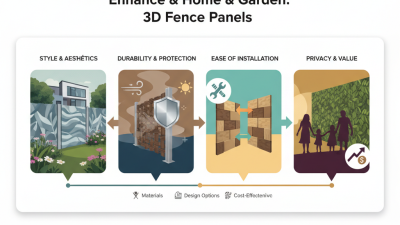
Choosing the right 3D Fence Panels in 2026 requires more than comparing prices. Global buyers must examine wire diameter, panel height, mesh spacing, coating quality, and installation requirements. A panel may look strong in a product photo but feel different when handled on a windy job site. Small details matter.
This guide evaluates leading 3D Fence Panels through practical purchasing criteria. We consider galvanized steel, PVC coatings, welded joints, V-shaped reinforcements, post compatibility, and packaging protection. Coastal projects need stronger corrosion resistance. Industrial sites may require heavier wires and narrower mesh. Residential gardens often prioritize appearance, easy installation, and budget control. Measurements are checked carefully, because a five-millimeter difference can affect post alignment.
Our recommendations are based on technical specifications, supplier communication, installation experience, and visible product quality. We also consider export packaging, container efficiency, replacement parts, and after-sales support. Regional building requirements can differ, so buyers should confirm local standards before ordering. No single fence fits every climate or project.
Some assumptions need testing.
Prices, coatings, and availability may change during 2026. Supplier claims should be verified through samples, certificates, factory photographs, and written specifications. This review aims to help distributors, contractors, and property owners ask better questions before purchasing. It does not replace professional engineering advice for high-security or structurally demanding applications. A reliable choice is not always the cheapest one. It is the product that performs consistently after delivery, installation, and exposure to real weather.
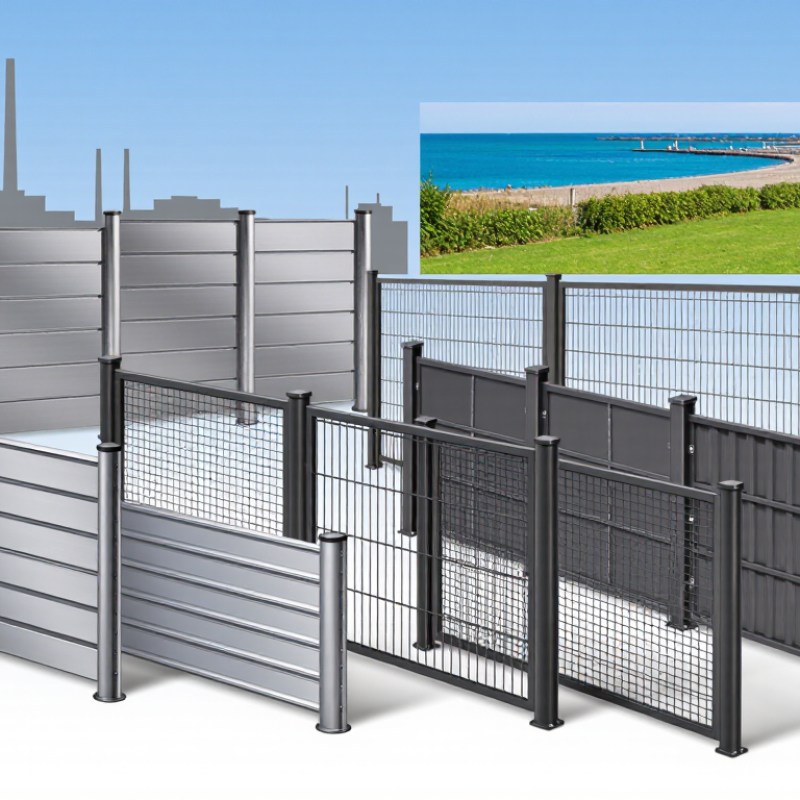
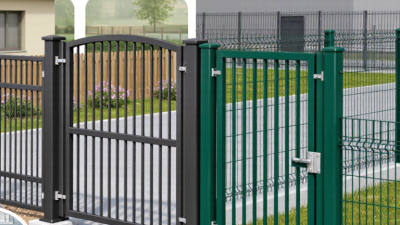
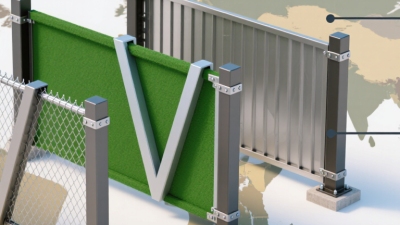
A 3D fence panel is a welded wire panel with V-shaped bends along its surface. These folds increase stiffness without adding excessive steel weight. The design creates a practical balance between visibility, strength, and installation efficiency. Common finishes include galvanized steel and powder-coated surfaces. Buyers should check wire diameter, mesh opening, panel height, and coating thickness before comparing prices.
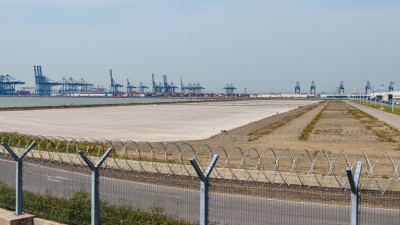
These panels serve residential boundaries, factories, schools, warehouses, sports grounds, and transport facilities. Their open mesh allows sunlight and airflow while defining a clear perimeter. On a typical site, posts are set into concrete, then panels are fixed with clamps or security fasteners. Uneven ground requires stepped installation or careful panel alignment. Small measurement errors can produce visible gaps.
The global market includes manufacturers, contractors, distributors, and project buyers across many climate zones. Coastal areas need stronger corrosion protection, while cold regions require attention to frost movement and concrete depth. Export buyers should review packing methods, container loading, technical drawings, inspection records, and replacement-part availability. Local installation skills also affect the final result. A low unit price may become expensive after freight, customs handling, labor, and site adjustments. No panel fits every climate. That assumption can distort a quotation. Specifications may also change after engineers inspect the soil, wind exposure, and security requirements. Comparing complete delivered systems is more reliable than comparing panel prices alone.
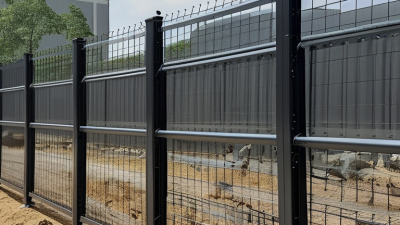
For global buyers, 3D fence panels should be judged by wire strength, mesh spacing, and height options. A 4–5 mm wire diameter offers useful rigidity for residential, commercial, and light industrial boundaries. The 50×200 mm mesh balances visibility with dependable resistance to everyday impact. It also makes inspection easier.
In field evaluations, thicker wire usually feels more stable during handling and installation. However, weight increases quickly. That affects transport costs, posts, and fixing hardware. A 50×200 mm opening can limit unauthorized access while preserving airflow and daylight. Check the actual wire diameter, not only the product description.
Height selection should match the site’s function.
The 0.63 m option suits low landscape borders and access control. Heights from 1.03 to 1.83 m cover many home and business applications. The 2.03–2.43 m range provides stronger visual separation and greater boundary presence. I have seen buyers choose tall panels without checking ground conditions. That creates unnecessary strain in soft soil. Panel coatings, weld consistency, packaging, and dimensional tolerance also deserve inspection. No specification fits every site. Supplier drawings and sample measurements can reveal small differences before a large shipment is approved.
2026 Best 3D Fence Panels for Global Buyers
Global buyers should treat zinc coating mass as a measurable specification, not vague marketing language. EN 10244-2 classifies zinc coatings on steel wire by coating mass and test method. A 40 g/m² coating equals roughly 5.6 microns. A 275 g/m² coating reaches about 38.5 microns, using zinc’s density of 7.14 g/cm³. That difference affects edge protection, handling damage, and maintenance needs. Small differences matter.
ISO 1461 applies to hot-dip galvanized fabricated steel products, including suitable posts and structural components. It requires minimum local and mean coating thicknesses based on steel thickness. For wire panels, buyers should request EN 10244-2 test results, wire diameter, coating mass, and batch traceability. Salt-spray hours alone can mislead. Real outdoor exposure includes rain, dust, cutting damage, and stagnant water.
The NACE IMPACT study estimated global corrosion costs at about 3.4% of worldwide GDP, while noting that 15–35% could be reduced through better corrosion management. International Zinc Association market data identifies galvanizing as the largest zinc-use segment, commonly representing about 60% of demand. These figures support practical specification work, but they do not guarantee identical service life everywhere. Coastal air, industrial pollution, soil contact, and poor drainage can shorten performance. A stronger coating is useful, but installation quality still deserves closer review.
| Evaluation Dimension | Recommended Specification for Global Buyers | Relevant Standard or Reference | Practical Corrosion-Protection Value |
|---|---|---|---|
| Panel wire diameter | 4.0–6.0 mm for general residential, commercial, and light industrial fencing | Project specification; confirm nominal diameter before coating | Larger wire generally improves stiffness, impact resistance, and retained section strength after corrosion |
| Typical 3D mesh opening | 50 × 200 mm or 55 × 200 mm; smaller openings can be selected where higher anti-climb performance is required | Project and security design requirement | Smaller apertures reduce footholds and make cutting or object passage more difficult |
| ISO 1461 hot-dip galvanized coating | For fabricated steel components with a material thickness above 3 mm and up to 6 mm: minimum average coating thickness of 70 µm, approximately 500 g/m² zinc | ISO 1461:2022 coating requirements for fabricated iron and steel articles | Provides a substantially thicker zinc layer than many electro-galvanized finishes; actual mass should be confirmed by testing |
| ISO 1461 thickness-to-coating guide | Steel >1.5–3 mm: 55 µm average, approximately 390 g/m²; steel >3–6 mm: 70 µm, approximately 500 g/m²; steel >6 mm: 85 µm, approximately 610 g/m² | ISO 1461 minimum average thickness values; mass equivalents are approximate using zinc density of about 7.14 g/cm³ | Useful for comparing coating thickness, but the applicable value depends on the thickness of the steel article |
| EN 10244-2 zinc coating on wire | Specify the wire diameter, coating class, minimum zinc mass, and test method together; do not use zinc mass alone as the complete requirement | EN 10244-2, Steel wire and wire products — Non-ferrous metallic coatings on steel wire — Zinc or zinc alloy coatings | Creates a measurable wire-coating requirement and supports consistent inspection across export markets |
| Procurement zinc range for wire panels | 40–275 g/m² may be used as a purchasing range, provided the buyer states the exact minimum value and coating class | Commercial specification aligned with EN 10244-2; the range is not a single universal EN 10244-2 requirement | 40 g/m² is a light coating for lower-exposure applications; 200–275 g/m² is more suitable for demanding outdoor exposure when supported by the required class and test results |
| Recommended corrosion system | Hot-dip galvanized wire or panel, followed by an exterior-grade powder coating where appearance and additional barrier protection are required | Specify galvanizing standard plus the powder-coating system separately | The zinc provides sacrificial protection; the organic topcoat adds a barrier and improves color retention |
| Powder-coating thickness | Typically 60–120 µm dry-film thickness for exterior fencing, subject to the coating system and substrate preparation | Project specification; measure with a suitable dry-film thickness gauge | Higher thickness does not automatically guarantee better durability; adhesion, pretreatment, curing, and edge coverage are also critical |
| Cut-edge and weld protection | Prefer panels galvanized after welding, or require zinc-rich repair treatment on exposed cut edges and weld areas | Repair procedure should be agreed in the quality plan; ISO 1461 includes requirements for repair of damaged areas | Reduces early red-rust formation at welds, cut ends, handling damage, and drilled or modified areas |
| Salt-spray testing | Use neutral salt-spray testing only as a comparative quality check, not as a direct prediction of outdoor service life | ISO 9227 for salt-spray test methods; acceptance hours must be defined by the project | Helps identify coating defects and process variation, but natural exposure, UV, humidity, pollutants, and installation conditions also affect durability |
| Exposure-based selection | 40–100 g/m²: mild, low-pollution environments; 100–200 g/m²: typical outdoor exposure; 200–275 g/m² or ISO 1461 hot-dip galvanizing: humid, coastal, industrial, or higher-risk locations | Indicative procurement guidance; select the final system through a site corrosion assessment | Coating selection should consider humidity, chloride deposits, sulfur pollutants, drainage, cleaning, and expected maintenance intervals |
| Quality documents to request | Coating certificate, zinc-mass or thickness test results, wire-diameter report, weld inspection record, powder-coating thickness report, and packing inspection record | Inspection plan agreed before production | Improves traceability and allows buyers to verify that the delivered panels match the corrosion-protection specification |
Security starts with load paths, not panel appearance. A 3D fence panel transfers impact and wind forces through its V-shaped bends, welded intersections, posts, and foundations. Deeper bends usually improve section stiffness, but they cannot replace correct wire diameter or spacing. ASTM A1064/A1064M provides recognized procedures for wire tensile properties and weld-shear performance. Buyers should request test values, sampling details, and failure photos. Shiny welds prove little. Field checks often reveal incomplete fusion, heat-damaged coatings, or welds placed beside stressed bends. This is an uncomfortable procurement gap.
Wind design must start with a site-specific basic wind speed. According to Global Wind Atlas 3.0, developed by the World Bank and DTU, mapped wind data supports preliminary site screening. Final calculations should follow the governing code, such as ASCE 7-22 or EN 1991-1-4. ASCE 7-22 expresses velocity pressure through qz = 0.00256 Kz Kzt Kd V² in psf, before exposure and enclosure factors. Panel porosity, fence height, corner zones, gate openings, and terrain can change the demand. Posts and concrete often fail before the mesh. Ask for deflection limits, pull-out assumptions, corrosion allowance, and connection details. I would not accept a generic “high wind” claim. Some designs look rigid but omit foundation calculations. That omission can become expensive after the first severe storm.
Global buyers should evaluate 3D fence panels beyond appearance and unit price. Request material certificates, coating records, and recent inspection reports. ISO 9001 supports manufacturing control, but it does not prove product performance. Confirm whether panels meet relevant regional standards, such as EN or ASTM requirements. Ask for the exact test method, sample size, and laboratory identity. Vague certificates create expensive uncertainty.
Tips: Build a landed-cost sheet before ordering. Include panel prices, steel surcharges, packaging, ocean freight, insurance, customs duty, brokerage, inland delivery, and possible storage fees. Compare Incoterms carefully. A low FOB quote may become costly after port handling and local transport. Check the fine print. Also measure pallets, container loading efficiency, and damage allowances. These details can change the final cost by several percentage points.
Service-life data deserves equal attention. Request zinc coating weight, wire diameter, powder-coating thickness, adhesion results, and corrosion-test conditions. Salt-spray hours are useful for comparison, but they do not perfectly predict outdoor life. Soil moisture, coastal air, ultraviolet exposure, and cut edges matter greatly. Numbers can mislead. A practical buyer should inspect field references, warranty exclusions, and replacement procedures. One common mistake is treating a warranty period as guaranteed service life. It is only a commercial promise, and the assumptions should be written clearly.