Sichuan Lanfan Transport Construction Co., Ltd. specializes in the production of various metal mesh fences.
Leave Your Message

2026 Best Security Barbed Wire Types for Global Buyers?

In 2026, global buyers need more than a sharp-looking perimeter. They need Security Barbed Wire selected for purpose, location, and long-term performance. A coastal warehouse, inland logistics yard, and remote utility site face different risks. Salt air attacks steel. Dust enters moving parts. Heavy rain exposes weak drainage and poor galvanizing. Product choice must reflect those details.

Security consultant Charles A. Sennewald, CPP, has often emphasized, “Security is a process, not a product.” That principle remains useful when comparing concertina wire, razor barbed wire, traditional barbed wire, and welded security systems. The strongest option is not automatically the most suitable one. Buyers should examine steel grade, zinc coating, blade profile, coil diameter, tensile strength, installation method, and maintenance access. They should also verify supplier testing, traceability, packaging quality, and documented compliance with local safety requirements.

Small details matter.

A damaged coil can create installation problems. Inconsistent blade spacing can reduce visual uniformity. Weak brackets may fail before the wire does. These issues are easy to overlook during price comparisons. They deserve attention.

This guide reviews leading Security Barbed Wire types for international procurement in 2026. It considers practical protection, weather resistance, lifecycle value, and responsible installation. However, no product works alone. Lighting, access control, cameras, warning signs, trained personnel, and regular inspections still shape real security performance. A perfect specification may still fail when site conditions are misunderstood. That is an uncomfortable, but necessary, point for every buyer.
2026 Best Security Barbed Wire Types for Global Buyers?

What Is Security Barbed Wire and How Does It Work?

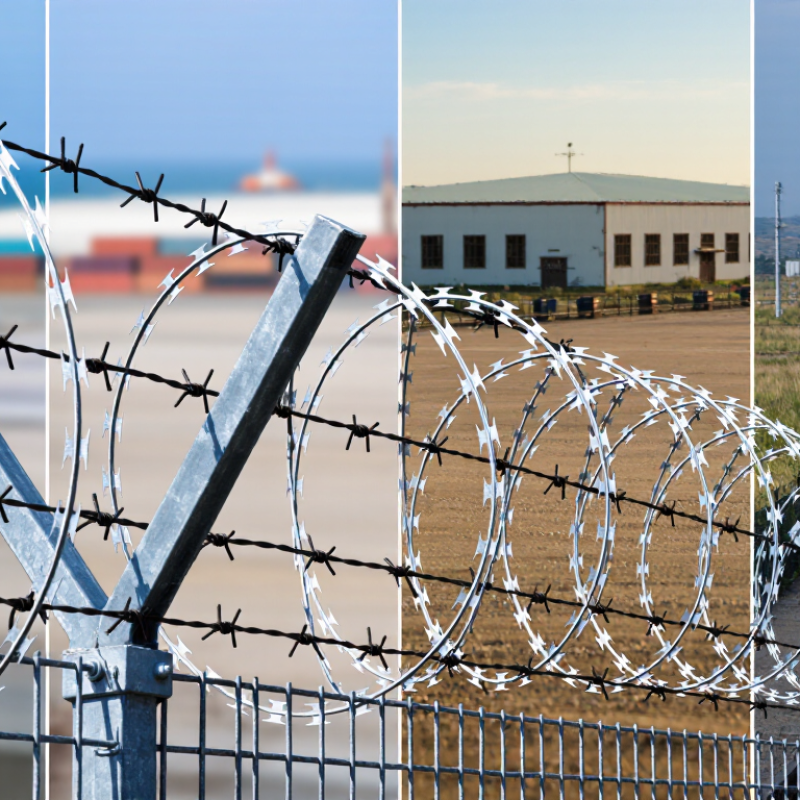
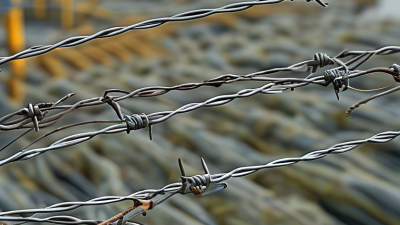
Security barbed wire is a perimeter barrier designed to discourage climbing, cutting, and forced entry. It usually consists of high-tensile steel wire with sharp barbs fixed at regular intervals. Some systems use flat razor strips or coiled configurations for higher-risk boundaries.

The working principle is simple. The wire creates a visible and physical obstacle above a fence, wall, or gate. When someone grips or presses against it, the barbs cause pain and reduce climbing speed. The barrier also increases psychological resistance, especially when installed in clear view. However, it does not replace lighting, access control, cameras, or trained site personnel.

Choosing the right type depends on location, threat level, corrosion exposure, and maintenance capacity. Straight barbed wire may suit agricultural and general boundary applications. Razor wire can provide stronger deterrence for controlled industrial sites, but it demands careful handling and professional installation. Coastal air, heavy rain, and chemical dust can accelerate corrosion, even on galvanized steel. That detail is often underestimated.

Safety matters. Warning signs, secure mounting, rounded transitions, and regular inspections help reduce accidental contact. Local building, workplace, and public safety requirements should guide every design. No barrier is perfect. A poorly maintained system may appear secure while its loose fittings create gaps. Practical reviews should check tension, rust, sharp edges, and nearby climbing aids. Sometimes, better planning matters more than adding more wire.
2026 Best Security Barbed Wire Types for Global Buyers

Security barbed wire is a physical perimeter barrier made from twisted steel wire with sharp barbs. It works by increasing the time, effort, and risk required to climb, cut, or pass through a fence. Higher-tensile wire and razor-wire designs generally provide stronger deterrence than conventional low-tensile barbed wire.

The chart compares indicative tensile-strength ranges in MPa. Conventional barbed wire commonly falls within the low-tensile category, while high-tensile barbed wire and razor-wire cores are commonly manufactured from higher-strength steel. Actual performance depends on wire diameter, steel grade, zinc or zinc-alloy coating, blade design, installation quality, and applicable regional standards.

Reference basis: EN 10223-1 tensile-strength categories for steel barbed wire and typical high-tensile steel cores used in concertina and flat-loop razor-wire systems. Confirm project values against the supplier’s test certificate and local procurement standard.

Which Security Barbed Wire Types Are Available in 2026?

In 2026, global buyers can choose from several security barbed wire types. Conventional galvanized barbed wire remains common for farms, warehouses, and boundary fencing. PVC-coated wire adds color and improves visual integration. High-tensile wire uses thinner steel with stronger tension, but installation must be precise. Poor tensioning can reduce its real performance.

Concertina razor wire is available in galvanized or stainless steel versions. It is usually supplied as coils, flat loops, or linear barriers. Flat-loop razor wire suits walls and narrow corridors. Welded razor mesh offers a more rigid barrier and cleaner appearance. Some suppliers also provide polymer-coated products for coastal or humid environments. The labels are not perfectly consistent.

Grand View Research’s Barbed Wire Market report projects approximately 5.5% annual growth from 2024 to 2030, reflecting continued demand for perimeter protection.

Buyers should compare coating mass, wire diameter, tensile strength, clip spacing, and coil recovery after installation. EN 10244-2 and ASTM A641 references can help verify zinc-coated wire quality. ISO 9227 salt-spray testing may support corrosion evaluations, but it cannot reproduce every outdoor condition.

Field experience matters. A coastal site, livestock area, and logistics yard need different specifications.

Selecting the most aggressive-looking type is not always the most reliable decision.

How to Compare Materials, Designs, and Protective Performance

2026 Best Security Barbed Wire Types for Global Buyers?

How to Compare Materials, Designs, and Protective Performance

Choosing security barbed wire starts with the site, not the product label. Galvanized steel suits many dry or moderately humid environments. Stainless steel performs better near saltwater, chemical exposure, or frequent cleaning. PVC-coated wire adds visual contrast and extra surface protection. However, coating quality varies. Scratches can expose the metal beneath.

Design also affects practical performance. A larger wire diameter usually improves strength, while tighter barb spacing can discourage climbing. Helical coils cover wider fence sections, but they need stable brackets and careful tensioning.

For high-wind sites, examine support posts, fixing points, and load distribution together. One strong wire cannot repair a weak fence system.

Tips: Request material grade, coating thickness, tensile data, coil dimensions, and test conditions. Compare like with like. Check samples for uneven galvanizing, loose barbs, sharp burrs, or damaged coatings. Measure the distance between posts before ordering. It is an easy detail to miss, and mistakes become expensive after installation. Protective performance also depends on visibility, lighting, maintenance access, and local safety requirements. No material wins everywhere. A cheaper option may work well inland but fail early beside the sea. Recheck assumptions against the actual climate, fence structure, and maintenance plan.

Where Each Barbed Wire Type Works Best Worldwide

Traditional galvanized double-strand barbed wire suits farms, warehouses, and rural boundaries. Its twisted steel strands tolerate wind, dust, and uneven posts. High-tensile wire works better across long distances because it needs fewer supporting posts. PVC-coated wire fits humid coastal regions, though damaged coating can trap moisture underneath. Industry estimates place the global barbed wire market above USD 3 billion, with steady growth through 2030, according to Grand View Research. Demand differs sharply by climate and infrastructure quality.

For ports, utility compounds, and remote industrial sites, concertina-style barriers provide stronger delay performance. However, they require trained installation and visible warning signs. ASTM A121 covers zinc-coated steel barbed wire requirements, while EN 10223-1 addresses dimensions and performance. These standards improve purchasing consistency, but they do not replace local safety rules. The World Bank’s 2023 Logistics Performance Index assessed 139 economies, showing major differences in transport reliability. That matters when importing heavy fencing coils. A cheaper product may become expensive after delays, corrosion, or replacement.

Tips: Specify wire diameter, barb spacing, coating mass, tensile strength, and coil weight before ordering. Request test certificates from an independent laboratory. Inspect several coils, not only one sample. Stainless steel seems ideal near saltwater, but its higher price may be unnecessary inland. I would also question very thin “security” wire; it often looks impressive and performs poorly under repeated impact. Always confirm permitted installation height and access requirements locally.

2026 Best Security Barbed Wire Types for Global Buyers? - Where Each Barbed Wire Type Works Best Worldwide

Barbed Wire Type Typical Construction Best-Fit Applications Recommended Worldwide Environments Key Advantages Main Limitations Typical Selection Guidance
Traditional Galvanized Barbed Wire Two twisted line wires with regularly spaced barbs; commonly manufactured with zinc-coated steel. Agricultural boundaries, livestock control, rural property lines, and general perimeter demarcation. Farms, ranches, grasslands, and low-to-medium security sites in temperate or moderately humid climates. Low material cost, simple installation, widely compatible with timber, steel, and concrete fence posts. Lower deterrence than razor wire; exposed zinc coating can eventually deteriorate in aggressive coastal or industrial atmospheres. A practical choice when boundary control is more important than high-security delay.
High-Tensile Barbed Wire High-strength steel line wires, often used with fewer but stronger support posts and longer spans than conventional wire. Large farms, ranch fencing, wildlife exclusion, remote boundaries, and long-distance perimeter projects. Open terrain, dry regions, large agricultural estates, and locations where transport and maintenance access are limited. High strength-to-weight ratio, reduced sag, efficient coverage over long runs, and comparatively low maintenance when correctly tensioned. Requires careful tensioning and compatible fittings; excessive tension or poor installation can increase post and anchor loads. Select when the project covers long distances and installation quality can be controlled.
PVC-Coated Barbed Wire Steel core protected by a polymer coating, commonly supplied in colors such as green or black. Residential, commercial, roadside, landscaping, and projects where visual integration is important. Humid climates, urban areas, gardens, and sites requiring a less conspicuous appearance than bare steel. Improved visual blending, an additional barrier against moisture, and reduced direct metal contact with the surrounding environment. Coating can be cut, aged by ultraviolet exposure, or damaged during handling; performance depends on coating quality and thickness. Use where appearance and added environmental protection justify a higher purchase cost.
Stainless-Steel Barbed Wire Barbed wire formed from corrosion-resistant stainless steel, with alloy grade selected for the exposure conditions. Coastal facilities, food-processing surroundings, water infrastructure, laboratories, and high-corrosion locations. Marine atmospheres, salt-spray zones, chemically exposed sites, and areas where long service life is critical. Strong resistance to rust and staining compared with ordinary carbon-steel products; suitable for demanding hygiene or appearance requirements. Higher initial cost; alloy selection must match the specific chemical and marine exposure. Consider when corrosion-related replacement or maintenance would cost more than the premium material.
Concertina Razor Wire High-tensile steel wire with sharp stamped blades arranged in coils that expand into a concertina barrier. Critical infrastructure, prisons, military facilities, border security, warehouses, and high-risk industrial sites. High-security perimeters where climb-through deterrence and rapid deployment are required. Very strong visual and physical deterrence, compact storage before deployment, and effective installation on walls, fences, or independent support systems. Higher handling risk, greater installation complexity, and stricter requirements for warning signs, access control, and local compliance. Reserve for genuinely high-security applications and use trained installers with suitable protective equipment.
Flat-Loop Razor Wire Razor-wire loops arranged in a relatively flat barrier, usually fixed to an existing fence, wall, or gate. Urban perimeter upgrades, wall tops, gates, utility compounds, and sites with restricted outward projection. Dense urban or industrial areas where a compact security layer is preferred over a large freestanding coil. Compact footprint, relatively neat appearance, and convenient retrofit capability for existing barriers. Usually provides less three-dimensional obstruction than a properly supported concertina system; still presents a serious injury hazard. Choose when site geometry or property boundaries limit the available space above or beyond the fence.
Electrified Barbed-Wire Support System Barbed or plain conductors mounted on insulated supports and connected to a compliant energizer and monitoring system. Restricted industrial compounds, agricultural animal control, remote facilities, and monitored perimeter systems. Large or remote sites where active detection and deterrence can be supported by reliable power, grounding, and maintenance. Adds active deterrence and alarm capability; can cover long boundaries with relatively limited physical material. Requires electrical safety controls, warning signs, regular testing, and compliance with local laws; not suitable for every public-facing location. Specify only with a professionally designed system, documented safety procedures, and local regulatory review.
Galvanized and Polymer-Coated Combination Zinc-coated steel core with an additional polymer layer, combining metallic corrosion protection with a colored exterior. Residential developments, commercial compounds, schools, parks, roadside projects, and visually sensitive boundaries. Rainy, humid, or urban environments where moderate corrosion resistance and a coordinated appearance are both required. Balanced service life, improved appearance, and broader application range than uncoated basic wire. Generally costs more than standard galvanized wire; damaged coating areas still require inspection and maintenance. A balanced option for buyers seeking practical protection without the cost of stainless steel or high-security razor systems.

Buyer note: Actual service life depends on steel grade, coating mass or thickness, wire diameter, installation quality, exposure conditions, impact, and local maintenance practices. Always verify applicable fencing, safety, animal-welfare, and electrical regulations before procurement or installation.

What Global Buyers Should Check Before Purchasing

For 2026 purchasing, buyers should match the wire type to exposure, not appearance. Hot-dip galvanized steel suits humid outdoor sites and routine perimeter control. PVC-coated wire adds color and reduces direct contact with the metal. Stainless steel works in coastal or chemically aggressive environments, but its higher cost needs justification. Barbed wire should meet relevant standards, such as EN 10223-1, while coating performance can be checked against ISO 1461 requirements.

Check the details.

Request mill certificates, coating thickness results, tensile-strength data, wire diameter, barb spacing, and coil weight. Confirm whether measurements use actual steel diameter or coated diameter. That small difference can affect installation and security calculations. The World Bank’s 2023 Logistics Performance Index collected responses from 4,090 supply-chain professionals across 139 countries. Its findings reinforce one practical lesson: reliable documentation and shipment visibility matter when sourcing internationally.

Packaging also deserves inspection. Coils should resist deformation, carry clear batch labels, and include corrosion protection for sea transport. Ask for pre-shipment photographs and independent inspection when order values are significant. The International Trade Centre reports that transport and border procedures remain important trade-cost factors, so unclear specifications may create expensive delays. A lower quotation may still be useful, but only after comparing delivered cost, replacement risk, and installation labor. In my view, buyers often overfocus on sharpness and undercheck coating uniformity. That is an easy mistake. Also, site design must follow local safety rules, especially near public areas, workers, and maintenance routes.