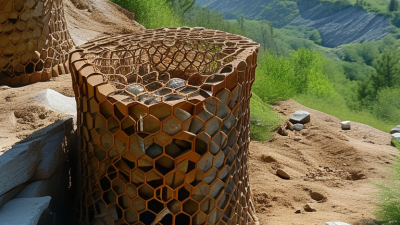
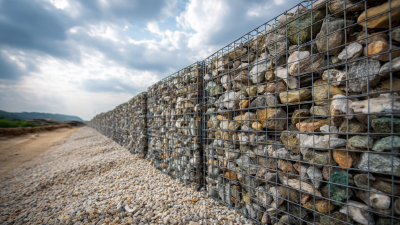
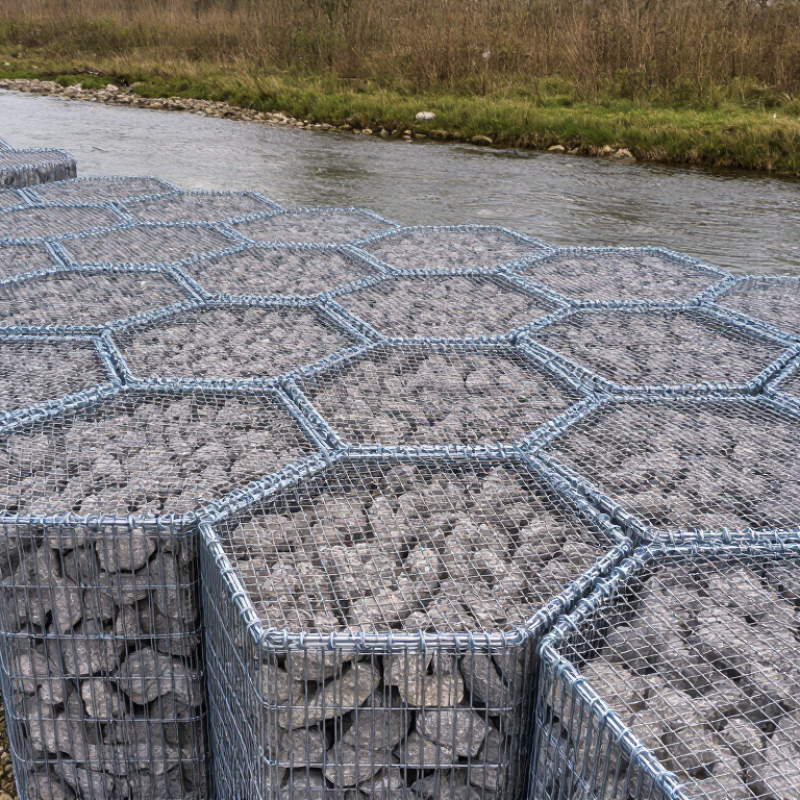
Hexagonal Gabion Cages are wire containers made from double-twisted, hexagonal mesh. They are filled with stone and assembled into units for erosion control, retaining structures, and channel protection. The mesh’s linked twists help limit unraveling if a wire breaks, though they do not make a cage indestructible. On site, the result is tangible: angular rock held within a flexible wire shell, shaped to fit a bank or slope.
Material specifications matter. ASTM A975/A975M covers double-twisted hexagonal mesh gabions and revet mattresses, including requirements for wire coatings and construction. The Federal Highway Administration’s Bridge Scour and Stream Instability Countermeasures: Experience, Selection, and Design Guidance (HEC-23, Third Edition, 2009) discusses gabion-based countermeasures within a broader engineering framework. These references help explain what to check; they do not replace project-specific design. A standard is not a site assessment.
Choosing a cage involves more than comparing mesh openings. Designers must consider stone size, wire coating, expected water flow, soil conditions, and installation quality. Poorly graded fill can leave gaps; damaged coating may shorten service life in a corrosive environment. Even a well-made cage can fail if its foundation or connections are inadequate. That detail is easy to underestimate. This guide explains how Hexagonal Gabion Cages are built, where they are used, and which specifications deserve careful review before purchase or installation.
What Are Hexagonal Gabion Cages?
Structure and Materials of Hexagonal Gabion Cages
Hexagonal gabion cages are wire containers assembled into baskets or mattresses and filled with stone. Their defining feature is double-twisted, hexagonal mesh. The twists connect adjacent wires, helping limit unraveling if a strand is damaged. The structure is flexible, but not flimsy.
Mesh size and wire choice affect both the cage’s strength and its ability to retain fill. EN 10223-3 specifies nominal mesh openings including 60 × 80 mm and 80 × 100 mm. These dimensions describe the mesh, not the stone size; fill must be large enough to stay inside the openings. ASTM A975-11(2020) covers double-twisted hexagonal mesh gabions and mattresses, including wire and coating requirements. Together, these standards offer useful checks when comparing specifications, though local project conditions still matter.
The mesh is commonly made from steel wire protected by a metallic coating; some specifications add a polymer layer for tougher exposure. Coating choice should reflect moisture, abrasion, and the expected service environment. Lid wires, lacing wire, and internal diaphragms help hold the basket’s shape and reduce bulging. Details matter. A cage can meet a mesh specification and still perform poorly if stones are undersized or packing leaves large voids. Standards guide selection, but they cannot replace careful installation checks.
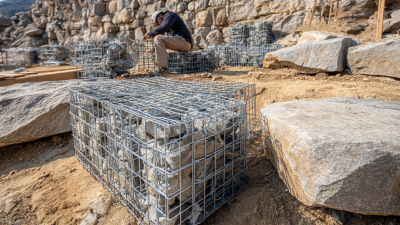
Hexagonal gabion cages are wire-mesh containers, usually made from galvanized or polymer-coated steel wire, and filled with stone. The mesh wire forms the panels, while heavier selvedge wire reinforces the edges and lacing wire joins panels together.
These representative example values are in millimeters; actual wire diameters vary by mesh size, coating, and project specification.
Hexagonal gabion cages are made from wire woven into a repeating pattern of six-sided openings. In common double-twisted mesh, paired wires are wrapped around each other several times at every junction. This twist helps limit unraveling if one wire is damaged. It does not make the mesh indestructible.
The mesh is formed on weaving equipment, then cut into panels for the cage sides, base, and lid. Workers join adjoining edges with lacing wire or spiral fasteners, keeping the connections close and consistent. A well-aligned seam lies flat; a loose or uneven one can open under pressure from the fill. Small details matter.
For longer cages, internal diaphragms divide the structure into compartments. They help keep the stone in place and reduce bulging along the sides. During assembly, crews usually raise the empty cage, secure its corners, and add stone in layers. Hand-sized pieces can be placed near visible faces, while smaller voids are filled behind them. The lid is tied down only after the cage is filled and shaped. Inspecting the twists, edges, and fastenings is practical, though rushed installation can still leave a weak spot that is easy to miss.
| Topic | Typical Specification or Feature | How It Works |
|---|---|---|
| Gabion cage | A compartmented wire-mesh container filled with stone | The filled cage forms a permeable, flexible unit commonly used for retaining walls, channel protection, and erosion control. |
| Mesh pattern | Hexagonal double-twist woven mesh | Wire is twisted together in pairs and woven into repeating hexagonal openings. The double twists help limit unravelling if a wire is damaged. |
| Common mesh openings | About 60 × 80 mm or 80 × 100 mm | Opening size is selected to suit the cage design and the stone size. The stone should be large enough to stay inside the mesh. |
| Wire diameter | Often approximately 2.0–3.4 mm for mesh wire | The appropriate diameter depends on the mesh opening, coating, design loads, and project requirements. Edge and lacing wires may be heavier than mesh wire. |
| Wire protection | Metallic zinc coating; polymer coating may also be specified | Coatings help protect wire from corrosion. The required coating type and mass should be set by the project specification and exposure conditions. |
| Panels and compartments | Base, sides, ends, lid, and internal diaphragms | Diaphragms divide long cages into cells, helping maintain their shape and reduce stone movement during filling. |
| Typical cage sizes | Common modules include 2 m or 3 m lengths, about 1 m widths, and heights around 0.5 m or 1 m | Available dimensions vary by project and supplier. Cages are placed and connected to form the required structure. |
| Assembly: shape the cage | Unfold the flat-packed unit and raise the sides and ends | Align the panel edges and attach them with lacing wire or approved connecting rings, following the specified spacing and fastening method. |
| Assembly: connect units | Join adjacent cages along their contacting edges | Connecting neighboring units before filling helps keep the structure aligned and improves continuity between cages. |
| Assembly: place stone | Use durable, appropriately graded rock that is larger than the mesh opening | Place stone carefully and arrange visible faces where appearance matters. Fill in stages and install diaphragms or bracing as required to limit bulging. |
| Assembly: close the lid | Fold the lid over the filled cage and secure all edges | Close and fasten the lid after checking that the cage is filled and shaped as specified. Use the project’s designated lacing or fastening details. |
| Key design checks | Stone grading, wire coating, mesh size, connections, foundation, and drainage | These details should be verified against site conditions and the project design; specifications are not interchangeable across all gabion applications. |
Note: Values shown are typical examples, not universal requirements. Confirm dimensions, materials, coatings, and assembly details against the applicable project specification and engineering design.
Hexagonal gabion cages hold loose stone inside a flexible, connected mesh. Their double-twisted wire helps limit unraveling if a strand is damaged, while internal diaphragms divide long baskets into smaller compartments. Stone presses against neighboring pieces, creating a dense fill that resists movement without needing mortar. It still needs careful placement.
ASTM A975-11(2020) lists 80 × 100 mm as a nominal mesh opening for double-twisted gabion mesh. That measurement helps designers match stone size to the cage: undersized pieces can escape, while oversized rock may leave gaps. The Federal Highway Administration’s HEC-23 guidance treats gabions and mattresses as site-specific hydraulic countermeasures, requiring checks of flow, foundation, and scour conditions. A cage alone does not stabilize a bank.
On site, crews typically fill baskets in layers, hand-place larger stones against exposed faces, and secure lids to the panels. This creates a rough surface that can slow water and trap sediment. Drainage is another benefit: water can pass through the voids instead of building pressure behind a solid wall. But gaps can clog with fine soil, and wire durability depends on exposure and coating condition. The detail people miss is the base. If it settles or washes out, even neatly packed stone can shift.
Reference: ASTM A975-11(2020); FHWA HEC-23, third edition, 2009.
What Are Hexagonal Gabion Cages?
Common Uses in Erosion Control and Construction
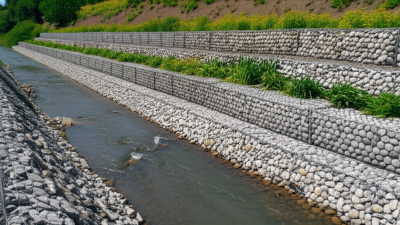
Hexagonal gabion cages are wire mesh containers filled with durable stone. Their flexible structure can conform to uneven ground while allowing water to drain through. Along streambanks, cages protect exposed soil from flowing water and help reduce surface erosion. At a channel bend, for example, a rock-filled cage can shield the bank where current and wave action repeatedly remove soil. Placement and stone size matter. Poorly fitted stones may leave gaps, while weak foundations can cause the structure to shift.
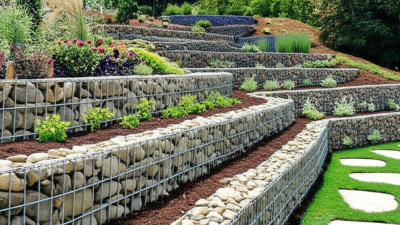
On construction sites, gabions are used for retaining walls, slope support, and protective facings around culverts or drainage channels. The open mesh helps relieve water pressure behind a wall, which can be useful where runoff is common. Cages also fit irregular sites without extensive shaping. But they are not a cure-all. Even a sturdy installation may settle unevenly if the ground beneath it is soft or poorly prepared. That detail is easy to overlook. Soil conditions, expected water flow, cage dimensions, and wire protection should be assessed for each project. For larger walls or vulnerable waterways, a qualified engineer can help determine suitable foundations and layout.
Hexagonal gabion cages are wire baskets filled with graded stone. Their flexible, porous structure can accommodate minor ground movement while allowing water to drain. For scale, a 2 × 1 × 1 m cage encloses 2 m³ before accounting for gaps between stones. That is useful on a sloping bank, where a rigid face may crack as soil shifts.
Key benefits include straightforward installation, local stone use, and permeability that can reduce water pressure behind a retaining face. The FHWA’s 2009 HEC-23 guidance includes gabions among streambank and scour countermeasures, while emphasizing site-specific hydraulic design. There is no universal safe-flow rate. Limitations matter too: wire can corrode or suffer abrasion, and undersized or poorly graded rock can escape through damaged mesh. Sediment may also clog voids over time. Not always a low-maintenance option.
Tips: Check water chemistry, expected flow, stone size, and wire coating before specifying a cage. ASTM A975 covers double-twisted hexagonal wire mesh for gabions, but compliance alone does not guarantee a durable installation. Inspect tie wires and basket edges after high flows. I would also question whether a gabion is appropriate where access for repairs is difficult.