


Why is it called 358 mesh?
When you first hear "358 mesh fence," it sounds like a technical code or model number — not exactly something that tells you what it is. But this name actually carries a very specific meaning, and understanding it gives you insight into why this type of fencing is trusted for prisons, data centers, and high-security perimeters worldwide. Let's break it down.
The Numbers Behind the Name
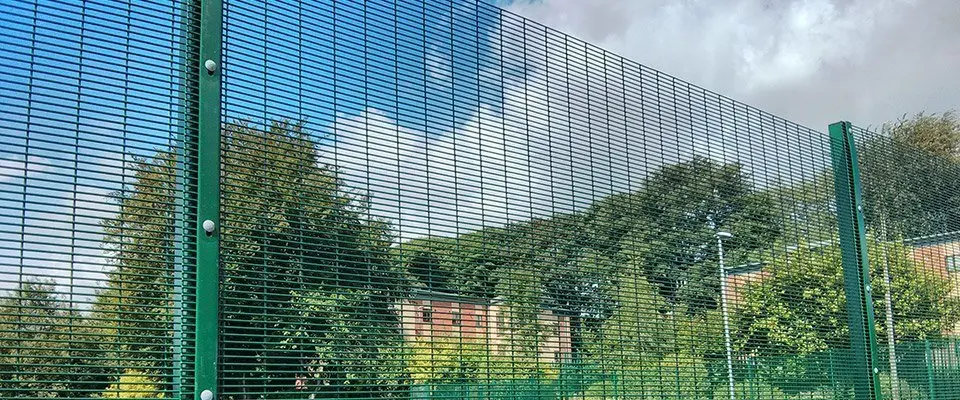
The term "358 mesh" comes directly from the mesh's measurements — 3" × 0.5" × 8-gauge. 3 refers to the 3-inch (76.2 mm) spacing between horizontal wires. 5 represents the 0.5-inch (12.7 mm) spacing between vertical wires. 8 stands for the 8-gauge wire, which equals roughly 4 mm in thickness. When you put it together, "358" becomes a short, convenient way to describe the exact mesh configuration — small openings, thick wires, and a design that's nearly impossible to climb or cut through.
Designed for Security
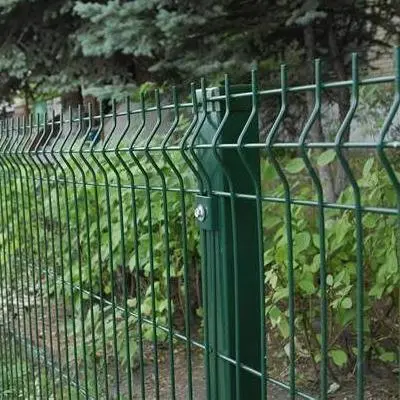
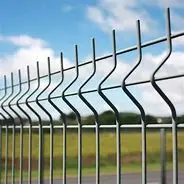
These precise measurements are not random. The small openings (76.2 × 12.7 mm) make it extremely difficult for intruders to get a foothold or even insert simple tools like bolt cutters. The heavy 8-gauge wire adds another layer of resistance. Together, this creates one of the strongest and most tamper-proof mesh designs available — hence its common nickname: "Prison Mesh" or "Anti-Climb Fence." That's why you'll often find 358 mesh installed around: Prisons and detention facilities, Power plants and substations, Airports and military bases, Data centers and warehouses. It's not just about keeping people out — it's also about visibility. Despite its strength, 358 mesh allows clear sightlines for cameras and guards, which is vital for real-time surveillance.
358 vs. 3510 and Other Mesh Types
You might also see other names like 3510 mesh. The logic is the same: "3510" means a 3" × 0.5" aperture made from 10-gauge wire (thinner than 8-gauge). While 3510 mesh offers decent strength, 358 remains the industry standard for high-security applications because of its superior resistance to cutting and deformation.
A Name That Became a Standard
Over time, "358" stopped being just a set of measurements. It became a recognized industry name — a shorthand for reliability and security. When engineers or contractors mention "358 mesh," everyone in the fencing world knows exactly what that means: uncompromising protection with excellent visibility.
In Summary
It's called 358 mesh because of its 3" × 0.5" × 8-gauge wire structure — a simple numeric code that represents a smart engineering design. But the numbers stand for more than measurements. They represent decades of refinement in perimeter security — strength, durability, and peace of mind built into every panel.