Sichuan Lanfan Transport Construction Co., Ltd. specializes in the production of various metal mesh fences.
Leave Your Message

How to Choose a Temporary Safety Fence?

A Temporary Safety Fence is more than a line of panels around a worksite. It must suit the ground, the activity, and the people who may approach it. A fence that stands firm on level pavement may shift on loose soil. A narrow gate can also slow deliveries or emergency access. The right choice starts with a clear site assessment.

The scale of workplace risk makes careful planning important. The U.S. Bureau of Labor Statistics reported 1,075 fatal work injuries in the construction industry in 2023. That figure does not measure fence-related incidents, but it shows why basic site controls deserve attention. Safety scientist Sidney Dekker offers a useful principle: “Safety is not the absence of accidents, it is the presence of capacity.” For fence planning, that means considering how the barrier performs when conditions change—not just how it looks on installation day.

This guide examines fence height, panel material, stability, visibility, gates, and rental needs. It also considers practical details, such as uneven ground, wind exposure, and frequent vehicle movement. OSHA guidance can help readers identify relevant site hazards, while manufacturers’ specifications clarify product limits. No fence solves every problem. Even a well-chosen barrier needs inspection, maintenance, and a realistic plan for access.
How to Choose a Temporary Safety Fence?

Assess Site Hazards, Boundaries, and Required Coverage

How to Choose a Temporary Safety Fence?

Assess the site before deciding how much fencing you need. Walk the perimeter and note vehicle routes, public entrances, uneven ground, and areas where materials could fall. Look for hazards that change during the day, such as deliveries or equipment moving through a gate. A fence can guide people away from danger, but it does not replace task-specific protection or supervision.

Small gaps matter. Mark the actual boundary, including corners, access points, and narrow passages between structures. Measure each run rather than estimating from a site plan; real sites rarely match neat drawings. Include enough coverage to close exposed edges, while keeping necessary gates clear and easy to monitor. Check whether panels can stand securely on the surface, especially on slopes or soft ground.

Wind changes things. Consider how the fence will be supported, and inspect it after strong gusts or site changes. A setup that looks adequate in the morning may leave a gap once work shifts. Recheck the boundary with the people using it. They often notice practical problems that a drawing misses.
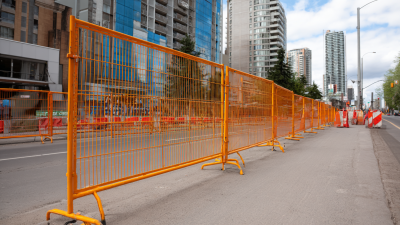
Check Safety Standards, Permits, and Site-Specific Rules

How to Choose a Temporary Safety Fence?

Before ordering panels, identify the applicable safety standard and what the fence must prevent: public entry, falling materials, or access to an excavation. The U.S. Bureau of Labor Statistics recorded 1,075 construction fatalities in 2023, including 421 from falls, slips, and trips. A perimeter fence can control access, but it is not automatically fall protection. OSHA’s construction rule, 29 CFR 1926.501, generally requires fall protection at six feet in specified situations. Check the exact conditions with a qualified safety professional. Small gaps matter.

Permits and site rules can change your choice. Ask the local authority and property owner about fence height, sidewalk clearance, visibility, anchoring, and permit duration before delivery. Near utilities, have service locations marked before installing posts. On a windy, exposed lot, use a documented wind rating and suitable ballast instead of guessing. A school entrance may need locked gates and clear sightlines; a roadside project may need additional traffic controls. Requirements differ by location. Paperwork alone is not enough.

Tips: Walk the boundary at pedestrian eye level. Photograph corners, slopes, and access points. Recheck panels after storms. I would still allow for one imperfect detail: a plan can miss a delivery route, so leave room to adjust the layout safely.

Compare Fence Materials, Heights, and Visibility

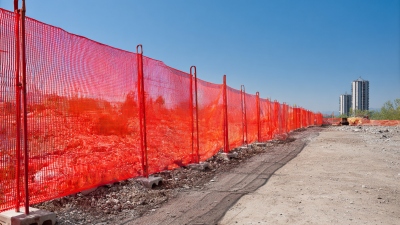
Temporary safety fencing should match the hazard, not just the site boundary. Plastic mesh is light and quick to move, making it useful for marking work areas. It can sag, tear, or catch strong wind, though. Metal panels feel sturdier and offer a clearer barrier, but they need stable feet and more effort to reposition. Choose materials that can handle the site’s weather and daily activity.

Height affects both access and stability. A low fence may mark a path, but it may not discourage people from stepping over it. Taller panels can improve separation, yet wind can push against them like a sail. Check the fence maker’s setup guidance and the project’s safety plan before selecting a height. A fence is not automatically fall protection. That distinction matters near edges or open excavations.

Visibility deserves equal attention. Bright mesh is easier to spot in daylight, while reflective strips or lights can help around dim work zones. Look at the fence from a driver’s or pedestrian’s approach, not only from beside it. Can people see the boundary before reaching it? Check it daily. I would also inspect ties, feet, and corners after rain or gusty weather; these small parts are easy to overlook, and one loose section can weaken the whole line.

Evaluate Stability, Gates, Anchoring, and Installation Needs

How to Choose a Temporary Safety Fence?
Evaluate Stability, Gates, Anchoring, and Installation Needs

A temporary fence should stay steady when people lean on it or wind catches its panels. Check the full assembly, not just the mesh. Look for secure panel connections, firm feet, and materials suited to the expected weather. A light fence may work indoors but shift on exposed ground. Test stability on the actual surface, especially where soil is soft or paving slopes. Small details matter.

Plan gate locations around real foot traffic and equipment routes. Measure the opening, including room for the gate to swing without striking stored materials or blocking a walkway. Check that hinges and latches operate smoothly after installation. A gate that sticks can invite people to leave it open. That is easy to overlook.

Choose anchoring based on the surface and the fence maker’s installation guidance. Ballast may suit some paved areas, while other sites may need approved ground anchors. Before drilling, check for buried services and get the necessary site approval. Don’t improvise with loose blocks or uneven weights; they can shift. Walk the perimeter after setup, press gently on several panels, and inspect joints and gate hardware. Recheck after strong wind, rain, or changes to the site. Perfect installation is rare, so leave time for adjustments.

How to Choose a Temporary Safety Fence? — Evaluate Stability, Gates, Anchoring, and Installation Needs
Fence Type Typical Stability Gate and Access Options Anchoring Considerations Installation Needs Best Suited For
Welded-wire panel system Rigid panels provide a defined barrier. Stability depends on panel connections, base design, layout, and exposure to wind. Can be configured with a matching walk-through or vehicle gate; check that gate hardware is compatible with the panel system. Commonly supported by weighted or interlocking feet. Add suitable bracing or anchoring when required by the site plan or manufacturer. Panels are connected in sequence. A level, unobstructed surface makes alignment and gate operation easier. Construction perimeters, equipment areas, and sites needing a more rigid, reusable barrier.
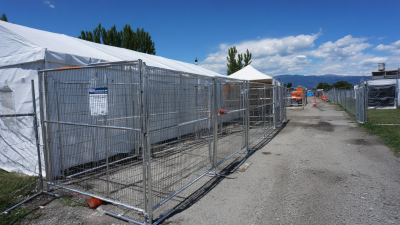
Temporary chain-link panels Provides a continuous, relatively rigid enclosure when panels are properly connected and supported. Wind exposure and attached coverings can affect stability. Often available with dedicated pedestrian or vehicle gate sections. Allow enough clearance for the gate to swing or slide as designed. Uses panel bases and clamps; additional ballast or anchoring may be needed depending on ground conditions and local requirements. Requires panel alignment and secure connections. Plan the perimeter and access points before placing the panels. Longer-duration work areas or locations where a more enclosed perimeter is needed.
Plastic safety mesh with posts Lightweight and flexible; generally offers less impact resistance and wind stability than rigid panel systems. Access is usually created by leaving a controlled opening rather than using a built-in gate. Clearly mark and supervise openings. Posts need suitable support in the ground or approved bases. Select the method for the surface and expected site conditions. Quick to deploy and easy to reposition. Keep the mesh tensioned and inspect posts and connections regularly. Short-term work zones, landscaping, and visual separation where a rigid perimeter is not required.
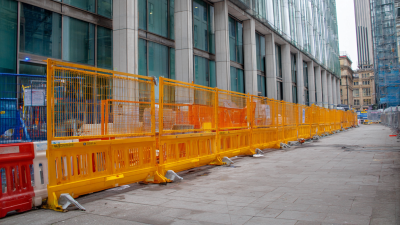
Portable crowd-control barricades Freestanding units are convenient for guiding pedestrian flow but are not a substitute for a secure perimeter fence. Openings can be arranged for managed entry. Use suitable access control and staff where crowd movement needs supervision. Typically rely on interlocking feet or connectors; use only on a stable surface and follow the system’s setup guidance. Units can be placed and linked by hand. Check for gaps, trip hazards, and routes that must remain clear. Events, queues, and temporary pedestrian routing.
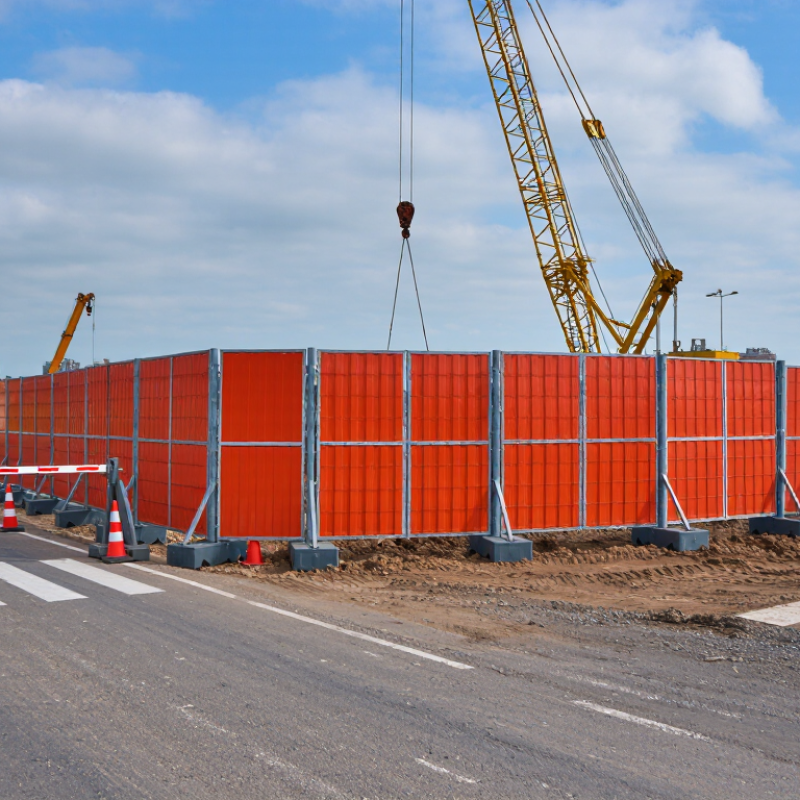
Solid privacy-screened panels Screening can increase wind loading, so stability needs particular attention. Do not assume a screened fence is suitable for exposed locations. Use a compatible gate and keep entrances visible and unobstructed. Screening should not interfere with gate movement or sightlines. Use the support, bracing, and anchoring specified for the panel and screen combination. Seek site-specific advice in windy or exposed areas. Requires careful assembly and inspection of connections, supports, and screen attachment. Sites needing visual screening, provided the system is designed for the added wind exposure.
Selection check: Confirm the required barrier height and purpose, ground and surface conditions, wind exposure, gate width and direction, emergency access, and applicable local safety requirements. Follow the manufacturer’s installation instructions; a temporary fence should not be treated as fall protection unless it is specifically designed and approved for that use.

Plan Inspections, Maintenance, and Safe Removal

A temporary safety fence needs a written inspection plan, not a quick glance from the site gate. Check it before work begins and after strong winds, vehicle contact, or nearby excavation. Look for loose couplers, bent panels, torn mesh, unstable feet, and gaps where people could enter. Small defects matter. Record the location, defect, action, and repair time; photographs make changes easier to track.

OSHA’s 2022 construction fatality data reported 1,069 worker deaths, including 421 fatal falls. These figures do not prove that fencing prevents falls, but they underline why perimeter controls deserve regular attention.

Assign one person to log checks and another to verify critical repairs. Replace damaged components rather than relying on a makeshift tie; it may hold briefly, then fail. After rain, inspect softened ground and shifted bases. A fence that looked sound yesterday may not be sound today. Keep gates secured when unattended, and maintain clear access for emergency response. The Bureau of Labor Statistics’ Census of Fatal Occupational Injuries provides useful context for tracking workplace risk, but a site’s own inspection records reveal its specific weak points.

Do not remove barriers until the hazard is controlled and the responsible supervisor approves access. Set an exclusion zone, then dismantle panels in a planned sequence with stable supports retained until each section is secure. Use suitable lifting help for heavy or awkward panels. Store components flat and separate bent parts for repair or disposal. Rushing removal is tempting; it is also where a good plan can unravel.