Sichuan Lanfan Transport Construction Co., Ltd. specializes in the production of various metal mesh fences.
Leave Your Message

7 Tips for Choosing a Basket Gabion Supplier

Choosing a Basket Gabion supplier affects more than the appearance of a finished wall. It influences structural stability, drainage performance, installation time, and long-term maintenance. On real construction sites, small differences matter. A wire mesh that looks strong may have weak welds, uneven coating, or unclear material records.

This guide introduces seven practical tips for evaluating a reliable supplier. It considers steel grade, wire diameter, mesh dimensions, corrosion protection, production consistency, documentation, and after-sales support. A professional supplier should explain whether the baskets use galvanized wire, PVC-coated wire, or another approved treatment. They should also provide product drawings, test information, packing details, and clear tolerances. Vague answers deserve attention.

Site conditions matter.

A supplier experienced with riverbanks may not fully understand highway retaining walls or landscape structures. Ask for relevant project examples, installation guidance, and realistic delivery schedules. Photographs are useful, but traceable records are stronger evidence. Visiting a factory, when practical, can reveal storage conditions, quality checks, and how finished baskets are packed.

Price should not be the only measure. Cheap materials can create expensive repairs, especially where water, salt, frost, or heavy loading are involved. Still, premium pricing does not automatically prove better quality. That assumption can fail. Compare specifications carefully, not just quotations.

The right choice comes from evidence, communication, and technical fit. A dependable Basket Gabion supplier will welcome detailed questions and admit limitations when necessary. That honesty is valuable.
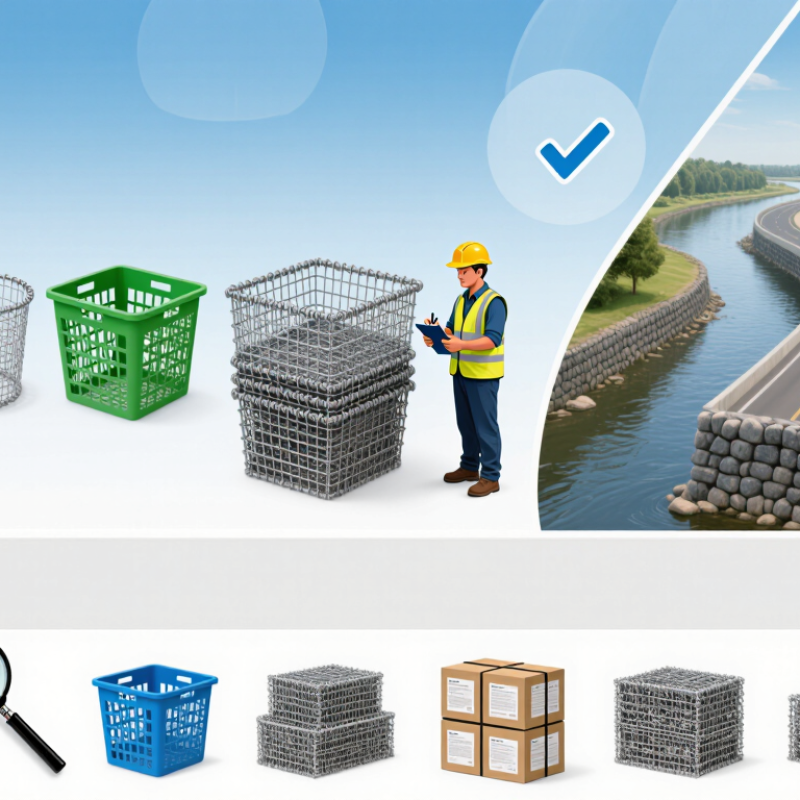
7 Tips for Choosing a Basket Gabion Supplier

Understanding Basket Gabion Specifications and Project Requirements

Choosing a basket gabion supplier starts with the project, not the catalog. Define basket length, width, height, mesh aperture, wire diameter, coating, and required stone size. EN 10223-3 specifies a typical steel-wire tensile strength range of 350–500 N/mm² for gabion products. Ask suppliers to provide test certificates, coating thickness, and dimensional tolerances. Vague descriptions create expensive surprises.

Hydraulic and soil conditions matter just as much. Use local rainfall-frequency data from NOAA Atlas 14 when checking drainage and flow exposure. FHWA’s HEC-23 guidance also stresses rock stability, scour control, and proper filter design. The filter must stop soil migration while allowing water to escape. For coastal or de-icing environments, compare the specified coating with ISO 9223 corrosivity conditions. A thicker coating is not automatically the best answer.

Review the supplier’s project calculations, installation drawings, and packing method. Stone should be hard, angular, and larger than the mesh openings; confirm the grading range in writing. ASTM A975 provides a useful reference for metallic-coated steel wire mesh and gabion construction. Do not rely on attractive sample baskets. A neat sample may hide weak lacing wire or inconsistent diaphragms. I would also request installation photos from comparable sites, although photographs can mislead without soil and flow data. The specification should identify every assumption, including design life, foundation preparation, settlement allowance, and maintenance access. Many purchasing errors begin with one missing line.


Assessing Supplier Experience, Product Quality, and Manufacturing Standards

7 Tips for Choosing a Basket Gabion Supplier

Assessing Supplier Experience, Product Quality, and Manufacturing Standards

A supplier’s experience should be visible in evidence, not promises. Ask for completed project details, production photos, and contactable references. Experienced teams can explain how basket gabions perform on slopes, riverbanks, and retaining structures. They should also discuss soil pressure, drainage, corrosion exposure, and installation limits clearly. A polished catalog is not proof.

Request a physical sample before placing a large order. Check the wire diameter, mesh opening, weld quality, panel dimensions, and surface coating. Run your fingers along the edges. Sharp burrs may reveal poor finishing. Ask whether each batch receives dimensional checks and coating inspections. Reliable suppliers should provide test reports, material certificates, and traceability records. Standards such as ISO 9001, EN, or ASTM can support confidence, but certificates need verification.

Manufacturing discipline matters during busy periods. Visit the factory when possible, or request a live production inspection. Look for organized storage, calibrated measuring tools, protective packaging, and documented quality procedures. Ask how the supplier handles defects, delays, and replacement claims. Their answer often reveals more than a sales presentation. I once trusted attractive pricing too quickly, and the delivered panels needed extra adjustment. That mistake was avoidable. Leave room for questions, and keep every specification in writing.

Comparing Materials, Customization Options, and Technical Support

Choosing a basket gabion supplier requires more than checking a low quotation. Compare wire material, coating, mesh size, and stone compatibility. Galvanized steel suits many drainage and retaining applications. Heavier corrosion protection may be wiser near saltwater or persistently wet soil. Ask for coating thickness, tensile strength, test reports, and production tolerances. A supplier should explain these figures in plain language. Vague answers are a warning sign. Small wire differences can affect handling, service life, and installation speed.

Customization matters when slopes, corners, outlets, or unusual loads make standard baskets awkward. Check whether the supplier can adjust length, height, diaphragm spacing, mesh patterns, and lacing details. Request a dimensioned drawing before production. It prevents expensive surprises. Also discuss stone size, filling methods, geotextile placement, and foundation conditions. A basket may look correct on paper yet perform poorly when stones slip through the mesh. I have seen teams focus on basket dimensions and overlook access for equipment. That mistake deserves attention.

Technical support separates a catalog seller from a dependable project partner. Look for installation guidance, load assumptions, packing lists, and prompt answers from qualified engineers. Ask how they handle damaged units, late changes, and site questions. Useful support includes clear photos, connection details, and inspection checkpoints. Keep records. They protect both sides. Do not accept confident advice without project data. Soil reports, drainage conditions, exposure, and design loads should guide recommendations. Even experienced buyers can miss details under schedule pressure. A short technical review before ordering can prevent rework and unsafe improvisation.

7 Tips for Choosing a Basket Gabion Supplier - Comparing Materials, Customization Options, and Technical Support
Tip Evaluation Area What to Compare Reliable Technical Evidence Questions to Ask the Supplier
1 Wire Material and Strength Compare low-carbon steel wire, wire diameter, tensile-strength range, mesh size, and the diameter of selvedge and lacing wires. The wire size should be selected according to the required load, stone size, exposure, and project design. Material certificate Tensile test Dimensional inspection
Check that the declared wire properties are consistent with the project specification and the applicable standard, such as EN 10223-3, ASTM A975, or another specified national standard.
What wire diameters are available? Are the mesh, selvedge, and lacing wires specified separately? Can you provide test results for tensile strength, elongation, and dimensional tolerance?
2 Corrosion Protection Compare uncoated, zinc-coated, zinc-aluminium-coated, and polymer-coated wire systems. Coating performance depends on coating mass or thickness, site exposure, water chemistry, abrasion, and installation conditions. Coating test report Visual inspection Standard reference
Request the coating classification, measured coating mass or thickness, adhesion results, and the repair method for damaged areas. ISO 1461 is commonly associated with hot-dip galvanized fabricated steel, while wire products may use other applicable standards.
Which coating standard applies to the wire? Is the stated value a minimum or an average? How are cut ends, scratches, and handling damage repaired? Is polymer coating required for the project environment?
3 Mesh and Structural Configuration Compare hexagonal double-twisted mesh, mesh opening, panel dimensions, diaphragm spacing, edge reinforcement, lacing method, and connection hardware. The mesh opening should be compatible with the specified stone grading. Shop drawings Assembly details Dimensional checklist
Confirm that the proposed configuration matches the engineer’s drawings and installation method. Double-twisted mesh helps maintain continuity if an individual wire is damaged, but overall performance still depends on the complete system.
Are diaphragms included at the required spacing? Are spiral binders, lacing wire, or mechanical connectors supplied? What tolerances apply to panel length, width, height, and mesh aperture?
4 Customization Capability Compare the supplier’s ability to produce project-specific lengths, widths, heights, stepped units, mattress-style units, partition layouts, corner pieces, and compatible connection accessories. Approved drawings Prototype review Sample approval
A capable supplier should provide a clear drawing revision process, bill of materials, packing plan, and confirmation of how non-standard dimensions affect manufacturing and installation.
What is the minimum order for custom sizes? Can the supplier produce a sample or first-article unit? How are drawing changes controlled, recorded, and approved before production?
5 Stone, Fill, and Installation Compatibility Compare the basket specification with the project’s approved stone size, angularity, durability, drainage requirements, geotextile arrangement, and backfill conditions. The supplier should not treat the basket as independent from the surrounding system. Installation guide Section drawings Site-use notes
The supplier should identify minimum and maximum recommended stone dimensions, filling sequence, face alignment requirements, bracing needs, and connection details. Structural design remains the responsibility of the project’s qualified designer.
What stone grading is recommended for the selected mesh? Are geotextiles, drainage layers, or filter details shown on the drawings? What temporary bracing is required during filling?
6 Quality Control and Traceability Compare incoming-material inspection, in-process mesh checks, coating verification, finished-product inspection, packing controls, and batch traceability. Quality records should identify the production lot and inspection date. Inspection plan Batch records Certificate of conformity
Useful records include wire certificates, coating measurements, mesh-aperture checks, dimensional reports, connector verification, photographs, and nonconformance-correction records.
What inspections are performed before shipment? Can quality records be linked to a specific batch? Are third-party inspections or pre-shipment inspections permitted? How are nonconforming units segregated?
7 Technical Support and Delivery Reliability Compare the quality of submittals, response time, installation guidance, packaging, labeling, delivery planning, replacement policy, and after-sales support. Technical support should cover design coordination without replacing independent engineering approval. Submittal package Packing list Delivery schedule
A complete package normally includes product data, material specifications, drawings, installation instructions, inspection documents, crate or bundle labels, and a process for handling shortages or damaged goods.
Who reviews technical queries and shop drawings? What information is included with each shipment? How are shortages, incorrect dimensions, coating damage, or transit damage documented and resolved?

Reviewing Pricing, Delivery Capacity, and Quality Assurance Policies

Tip 1: Compare the full price, not only the unit quote. Ask whether the price includes wire coating, mesh dimensions, connectors, packing, and inland transport. A cheap basket gabion may require extra fasteners or replacement panels later. Request a written quotation with currency, validity period, and payment milestones. Small details matter.

Tip 2: Test delivery capacity before placing a large order. Ask for current production schedules, monthly output, loading photographs, and previous shipment records. Confirm the lead time for standard and customized sizes. A reliable supplier should explain delays clearly, rather than promise an unrealistic date. Still, forecasts can fail. Weather, port congestion, and raw material shortages affect delivery. Build a reasonable buffer into your construction plan.

Tip 3: Examine the quality assurance policy in practical terms. Request wire tensile strength results, coating thickness records, mesh tolerance data, and batch inspection reports. Check whether inspectors examine welds, dimensions, hinges, and spiral connectors before packing. A documented process is more dependable than a confident sales statement. Ask how damaged goods are reported and replaced. The response reveals their accountability. One weakness deserves attention: paperwork may look complete while sampling remains limited. Consider an independent pre-shipment inspection for major projects. This adds cost, but it can prevent expensive site disputes and rework.

Verifying Supplier Credentials, Customer Feedback, and Contract Terms

Choosing a basket gabion supplier requires more than comparing prices. Verify the company’s registration, factory address, production capacity, and quality-control records. Ask for current certificates, not scanned files with unclear dates. The International Organization for Standardization’s ISO Survey 2023 recorded more than one million ISO 9001 certificates worldwide. That scale shows certification is common, but certification alone proves little about every shipment.

Request evidence for wire diameter, mesh opening, tensile strength, zinc coating, and stone containment performance. Independent laboratory reports should identify the tested product and batch. Speak with recent customers, preferably those using gabions for roads, riverbanks, or retaining structures. A 2024 review-behavior report found that 91% of consumers read online reviews, yet recycled testimonials can mislead procurement teams. Check dates, project locations, delivery problems, and responses to complaints. Look for patterns.

Contract terms need equal attention. Specify drawings, material standards, tolerances, packaging, inspection rights, delivery milestones, and replacement duties. Define who pays for damaged units or missing accessories. Include a written process for design changes and delayed delivery. Payment should follow measurable milestones, not vague promises. Keep records.

One detail is easy to miss. Confirm whether “galvanized” means the required coating mass. It may not. Ask for a sample and inspect the mesh before signing a large order. I would also leave room for independent inspection, because my first checklist would never catch every manufacturing error. Good suppliers welcome precise questions. Silent suppliers create expensive uncertainty.