How to Choose the Best 316 Wall Spikes for Security Needs?
Choosing the right 316 Wall Spikes is crucial for enhancing security. These spikes can deter potential intruders effectively. According to a report by the Security Industry Association (SIA), perimeter defense systems, including wall spikes, reduce crime rates by up to 40%. Starkly, they emphasize that not all spikes provide equal protection.
Experts recommend selecting quality materials for durability. Dr. Emma Roberts, a security consultant, states, “Investing in high-grade 316 Wall Spikes is non-negotiable for reliable security.” Her insight points to a common pitfall: many consumers overlook material integrity. Even slight variations in the metal can compromise effectiveness.
It's essential to understand your specific needs before selecting spikes. Some properties require harsher deterrents, while others may need a more subtle approach. Be mindful that aesthetics and functionality must be balanced. Choosing the best type can lead to long-term safety and peace of mind.
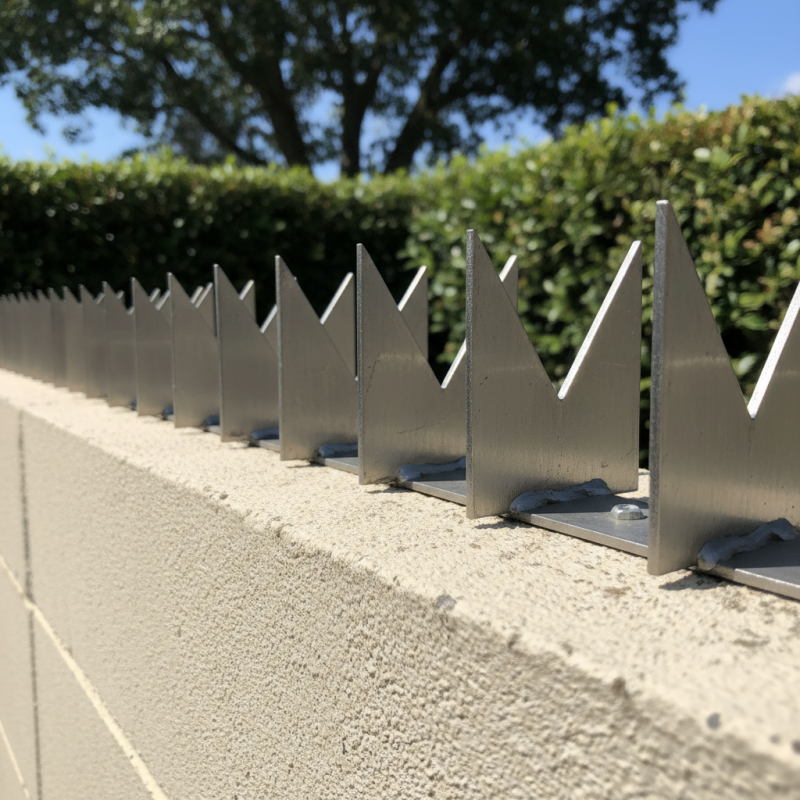
Understanding the Benefits of 316 Wall Spikes for Security
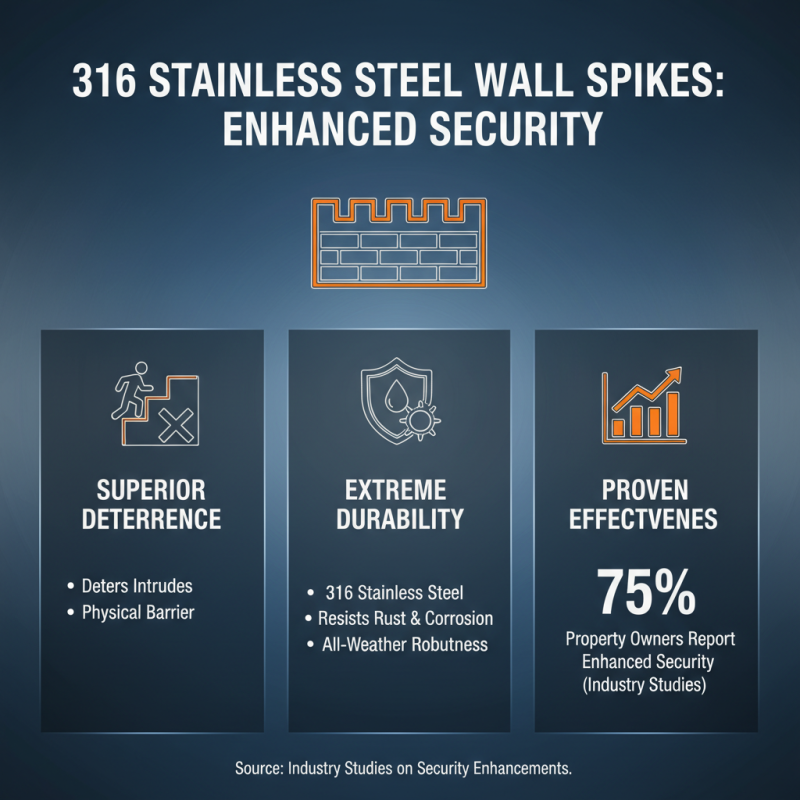
When it comes to enhancing security, 316 stainless steel wall spikes are an effective solution. They are designed to deter intruders while being robust against harsh weather conditions. The use of 316 stainless steel ensures that these spikes resist rust and corrosion, making them ideal for various environments. According to industry studies, around 75% of property owners report enhanced security after installing wall spikes.
Installing wall spikes not only acts as a physical barrier but also sends a clear message about security intent. Many experts highlight that a visible deterrent can reduce crime rates significantly. Wall spikes can be strategically placed to cover vulnerable areas, such as fences or walls. This effectiveness is further supported by crime statistics showing that properties with visible security measures experience up to a 50% reduction in break-ins.
**Tip: Choose spikes with rounded tops to prevent injury to animals and comply with regulations.** It’s vital to ensure your wall spikes are both functional and humane. Consider the aesthetic impact of your security solutions; industrial-looking spikes may not fit well in residential areas. Reflecting on community standards can foster a better acceptance of your security measures.
Key Features to Look for in 316 Wall Spikes
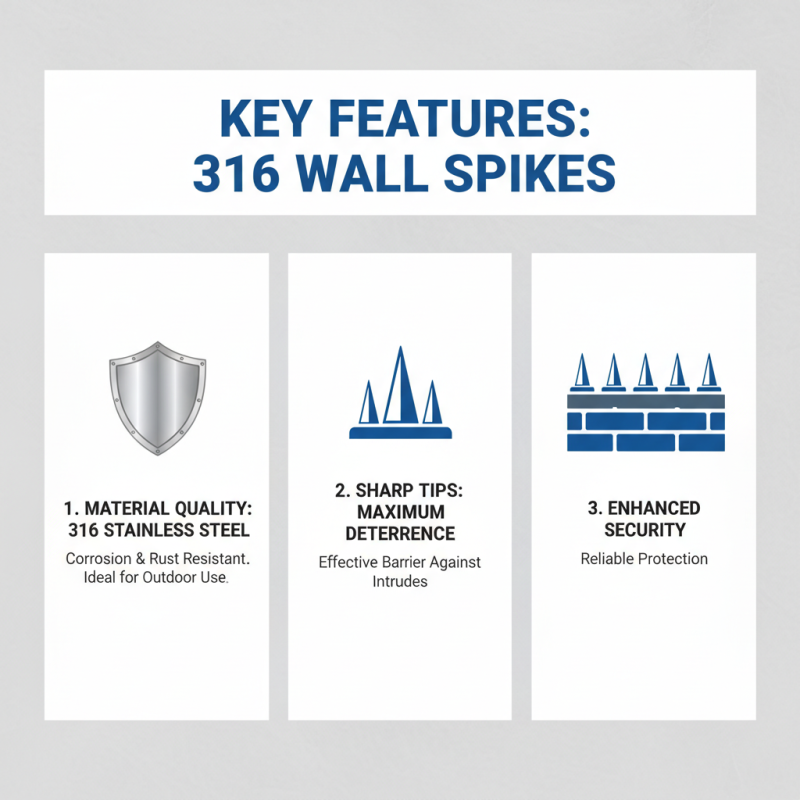
When choosing 316 wall spikes, certain features are crucial to enhance security. Material quality is one of the most important factors. 316 stainless steel is resistant to corrosion and rust, making it ideal for outdoor environments. The spikes should also have a sharp tip for maximum deterrence. This ensures that any would-be intruder is met with an effective barrier.
The length and spacing of the spikes can greatly affect their effectiveness. Longer spikes provide better protection. However, the spacing should be carefully considered. Too much space may allow gaps where intruders could exploit. Additionally, installation ease counts. Proper installation ensures the spikes remain fixed and functional over time. While looking for spikes, always check for safety standards. They should not pose a risk to pets or innocent passersby.
Finally, it's essential to consider aesthetics. The design of wall spikes should complement your property. An unattractive installation can detract from the overall look of a building. Therefore, blending functionality with visual appeal is key. Reflect on your specific security needs, and choose wisely.
Comparing Different Types of 316 Wall Spikes
When it comes to enhancing security, the choice of 316 wall spikes can make a significant difference. These spikes are known for their durability and effectiveness in deterring intruders. Different types are available, each with unique characteristics suited for various environments. Some spikes are designed for residential use, while others are better suited for commercial properties.
It’s essential to consider not just the design of the spikes but their installation method as well. Some spikes come with a peel-and-stick backing, making them easy to apply. Others require screws or other fasteners for a more permanent solution. The choice depends on your specific security needs and the surface they will be attached to.
Installation challenges may arise. For example, uneven surfaces may complicate the installation. Additionally, choosing the right height and spacing between each spike is crucial. Improper installation could reduce their effectiveness. Researching these factors will aid in making an informed decision. The right spikes, when selected and installed properly, can greatly enhance security and offer peace of mind.
Installation Considerations for Maximum Security
When considering the installation of 316 wall spikes, the layout is crucial. Begin by assessing the area that requires protection. Identify vulnerable points such as fences or low walls. Measurements must be accurate to ensure the spikes fit securely. Consider the height of the spikes as well; they should deter intruders effectively without causing hazardous situations for the general public.
Next, think about the surface where the spikes will be installed. This significantly impacts their effectiveness. A solid surface is ideal for robust installation. Ensure you have the right tools for this task. Using quality adhesives or fasteners can enhance stability. During the installation process, it’s essential to check for any obstructions that may interfere with the spikes' placement.
Lastly, communication with local authorities may be beneficial. Understanding any regulations can prevent future complications. Reflecting on the installation process, it’s easy to overlook small details like the exact spacing between spikes. Addressing these elements can maximize the security benefits. By focusing on these practical aspects, the installation can achieve optimum effectiveness.
Security Needs Evaluation: Effectiveness of 316 Wall Spikes
Maintenance Tips for Long-Lasting 316 Wall Spikes
Maintaining 316 wall spikes is crucial for ensuring their effectiveness in security applications. These spikes, made from high-grade stainless steel, provide corrosion resistance and durability. A study from the Security Industry Association indicates that properly maintained security features can reduce unauthorized access by up to 40%. Regular inspections can identify wear or corrosion early, preventing more significant issues down the line.
Cleaning 316 wall spikes is essential. Dirt and debris can mask any damage that needs addressing. Using a mild detergent and a soft brush keeps them in optimal condition. It's recommended to inspect spikes bi-annually. Pay attention to sharpness and alignment, as misalignment reduces their efficacy. A report from the American Society for Industrial Security suggests that neglected security elements can greatly decrease overall protection.
Consider the environment where the spikes are installed. Harsh weather can affect their performance. Applying a protective coating may enhance longevity, though this step is often overlooked. Regularly documenting inspections and maintenance helps ensure accountability and reliability in security practices. While many understand the importance of wall spikes, fewer appreciate the need for ongoing care. This oversight can lead to frustrating consequences when security is compromised.
How to Choose the Best 316 Wall Spikes for Security Needs? - Maintenance Tips for Long-Lasting 316 Wall Spikes
| Feature |
Description |
Maintenance Tip |
| Material |
Made from 316 stainless steel for superior corrosion resistance. |
Regularly inspect for signs of rust or damage, especially in coastal areas. |
| Height |
Available in various heights to deter different types of intruders. |
Choose the height based on the level of security required; taller spikes offer better deterrent effects. |
| Design |
Features sharp points that are effective in preventing climbing. |
Ensure that the spikes are correctly installed to avoid bending or breakage. |
| Installation |
Can be installed on walls, fences, and other structures. |
Follow manufacturer guidelines for proper installation techniques. |
| Aesthetic |
Available in various finishes to complement different architectural styles. |
Consider painting or coating to match the environment while maintaining durability. |